



Two high school students in Chicago recently wrote a letter to my friend, filmmaker Eli Steele. Their history classes told them that America was racist and oppressive, and nothing more. Nobody taught them why this country is worth defending. On November 5, those students will host a screening of Eli’s new documentary, White Guilt. After this conversation, you’ll understand why young people are seeking Eli’s groundbreaking film out.
I met Eli Steele in 2022. When I first announced on X that I planned to make a film about the pandemic school closures, Eli Steele agreed to mentor me and, then for three long years of production and post-production, continued to take my calls, patiently answering questions, helping to shape the film and finally coming onboard as a producer for 15 DAYS. We are also working together again on a new project. I can’t say more just yet, but I will soon, so please stay tuned.
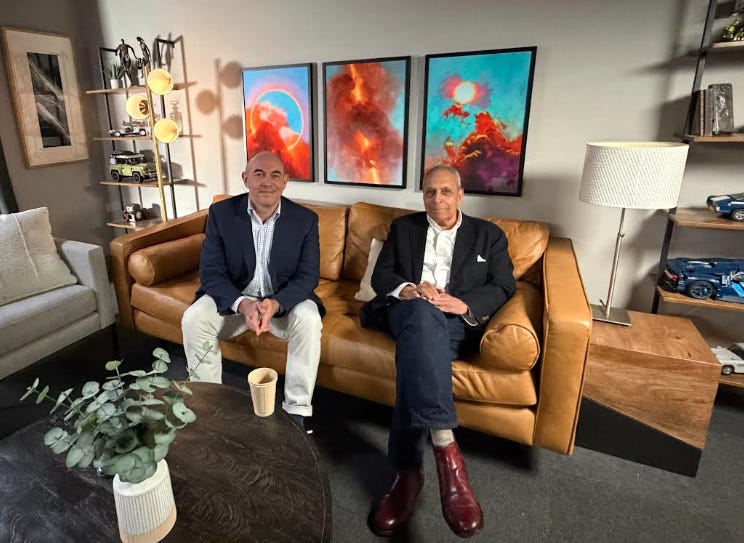
I have followed White Guilt’s making film from the start. While Eli was still shooting, he and his father Shelby stepped away from their rental SUV on Lombard Street in San Francisco for ten minutes. In that time, thieves broke in and stole more than $40,000 of camera gear. Many of you read about it here, and many donated to keep the production going.
White Guilt is the film many of you helped save, and it is finally out.

The film was released on October 6th and was made in collaboration with Eli’s dad Shelby Steele— it brings Shelby’s 2006 book of the same name into the present. The film asks how the country that won the civil rights fight ended up teaching kids to sort themselves into oppressors and victims.
People are watching. Within three days, the film broke into Amazon’s Top 10 new documentary releases and climbed to No. 34 among the platform’s best-selling documentaries.
Eli and I recorded this podcast on launch eve, two days before the third anniversary of October 7, the day in 2023, when Hamas invaded Israel, killed 1,200 people and took 251 hostages in the deadliest day for Jews since the Holocaust.
This conversation is a personal one for me. My family left Odessa for Brooklyn in 1977, when I was six. The Soviet Union manufactured much of the antizionist propaganda that now fills American campuses (read this and subscribe to Naya Lekht if you want to learn more). My parents talked about it at home, but it always felt like something that happened over there. For fifty years in America, nobody treated us as the other. October 7 changed that, and Eli’s film shows how we got here.
Here’s our conversation, edited for length and clarity.
Your father’s book is 20 years old. Why make this film now?
Eli: White guilt is not just a book. It is a real force, and most people do not see it. You cannot have a collision between 300 years of white supremacy and the civil rights movement without some fallout. King and the movement’s foot soldiers, including my grandparents and my father, told white America that using race that way was immoral. White America lost its moral authority, and it has tried to buy back its innocence ever since. That current drives much of what has happened to this country.
Then October 7 happened. I woke up, checked my email, and the first image I saw was a young woman’s body in the back of a pickup truck. America did not condemn that evil the way it would have in the 1990s. So what was different? What gave people license to call that horror resistance?
For me, that’s white guilt. Liberation ideologies like Marxism and the PLO have been here all along. They need grease to get into the system, and white guilt is the grease. They tell you that you need their ideology to be a good person, and that you are a racist if you question it. People want to keep their jobs, so they go along.
“The car does not run without oil.”
Your father stood up early. Why, and what did it cost him?
Eli: My father wanted to be an American more than anything. Immigrants look at America and want to live by its principles. My father was born here and was denied those principles, but he wanted them just the same.
He came of age in the 1960s with a lot of anger, and he joined the Black Power movement. In the film we show his trip to Algiers to meet the Black Panthers. I grew up with African statues in the house from that trip. On that trip he realized that America’s principles never failed him. The people failed to live up to them. Those principles hang on the wall in DC, in the Constitution and the Declaration of Independence. He decided to live up to them.
Then he saw the transaction. White people buy innocence. Black people sell victimization. Neither side can get out of that deal, and it drags the whole country down. The Palestinian leadership runs the same play. Arafat walked away from a deal that gave him almost everything he wanted, because victimhood was his power. Notice how Israel gets every Western evil superimposed on it. That’s white guilt.
You said Israel “acted that way” before October 7. What did you mean?
Eli: I mean concessions. I spent eight years at a human rights organization reading United Nations documents. Israel is the most indicted nation at the UN, and it knows it carries a higher burden than anyone else. After the Arabs lost in 1967, Palestinian leaders realized they could not beat Israel on the battlefield. So they took the fight inside people’s minds. If you can convince the world that Israel is evil and you are the victim, you hold enormous power.
Gaza is the big example. In 2005, Ariel Sharon pulled every Israeli out of Gaza and handed over the territory. An Israeli friend of mine said at the time that we would pay for it, and that they would come across that border one day. About ten years before October 7, she was already screaming about it. She had no white guilt. She saw the enemy with very clear eyes.
Why do Jewish organizations keep getting antisemitism wrong?
Natalya: I run a nonprofit, so I know that crisis is the easiest time to raise money. When the crisis ends, the money dries up. American Jewish organizations seem to thrive in crisis. They spun into a frenzy after October 7, but they haven’t solved anything.
Eli: I have a controversial take. I filmed a documentary at Coronado High School, and the ADL was involved. The ADL buys into the oppressor and oppressed model. It buys the idea that Jews are white, which is absurd. I’m Jewish myself. My mother is the daughter of a Holocaust survivor. Watch an Israeli soccer game. You can’t even tell who is white.
Jewish organizations betrayed the value of the individual to go along with the idea that we all belong to a race and owe a debt for the past. So if you’re a white Jew, you land on the same side as the white supremacist. Why would you allow yourself to be called white? Why would you give the racial order that power over you?
I would argue that Jews are not the canary in the coal mine. They are just the latest target. White guilt went after black people first, then white people, then Asians. After October 7, the story that Hamas fighters were the resistance won out. Once you excuse an evil like that, you have to explain it. The Jews must have done something. That is how antisemitism comes forward.
What do you hope this film does?
Eli: There is power in seeing things. I tried to pack this film with evidence, maybe too much. It’s a heavy film, and I don’t deny that. One of the more inflammatory lines says we have been cowards. We can keep being cowards and complain about the decline of the country. France drank its wine while the Nazis marched in. That’s our choice. The film is a warning, and Americans are in the same boat as the Israelis.
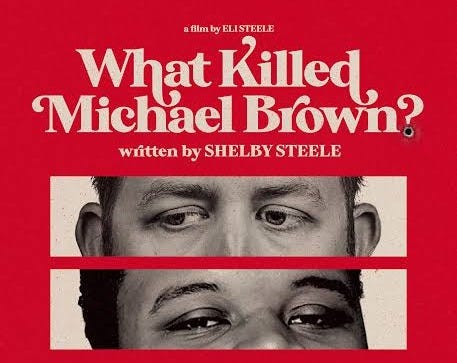
When What Killed Michael Brown? came out in the summer of George Floyd, people told us it gave them the language and the courage to argue back. I hope White Guilt does the same. This country is worth fighting for. Once it’s gone, it’s gone.
What are young people saying after they see it?
Eli: The letter from those Chicago students was devastating. Their classes covered only how racist and oppressive America was. Nobody taught them that George Washington stepped down from power at a time when kings ruled the world. That choice kept the democracy alive, and it paved the way for my own family’s freedom a century later.
At Arizona State, a student came up to me after a screening. He said the film made a powerful case for a merit-based society, and that it made him want to be more human. He was tired of the oppressor and oppressed lens. He wanted to meet a person and ask where they’re from without worrying that the question is offensive. If people walk away with that, I’m happy.
Our kids absorb this framework in the classroom long before they can question it. White Guilt gives parents the history and the language to push back. We plan to bring a premiere to New York City, and would love your help to fill the room.
Where to watch White Guilt
Stream it on Amazon Prime Video. Every purchase there helps the film climb the charts.
Watch on Apple TV or Google Play and YouTube.
Buy it directly from the filmmakers, so more of your money goes to the people who made it.
Host a screening at your school or church through Gathr, or reach Eli through whiteguiltfilm.com.
Read Eli
Subscribe to Eli’s Substack, Man of Steele. Start with “They’re Milking White Guilt,” where a childhood memory of overpriced candy bars in San Jose shows him how guilt turns into a transaction. Then read “What October 7 Revealed: The Hatred White Guilt Made Innocent.”
White Guilt in the press
Fox News: Eli’s op-ed on how the terror of being called racist is crushing free speech
Hollywood in Toto: The 20-year journey behind the film
The Daily Wire: How fear forged a new racial order centered on white guilt
Political.org: The documentary argues fear of the racism charge is silencing American speech
Cornell Law School: the April campus screening
Thank you, Eli, for this conversation and for everything you and your father have built. It changed the way I speak and the way I think. If this conversation moved you, share it with one parent who needs to hear it. And remember, 15 DAYS, the film Eli co-produced, is available right here for paid subscribers:


