


Ken Pope is a Senior Fellow at the Victims of Communism Memorial Foundation, where he focuses on academic operations. He also works with the Coalition for Empowered Education, which VOC co-founded in 2023.
Before this work, Ken served in the U.S. Army as a Russia specialist. His first tour put him on the border between East and West Germany in 1986. He saw the fence with his own eyes.
Ken has been a friend and a great supporter of Restore Childhood for several years. I heard him speak at the Teachers Freedom Alliance conference in Dallas this summer, and I recorded this conversation the day after I watched White Nights in 70mm at the Paris Theater. As you know, my own immigration background makes this conversation personal, and it’s part of why I wanted to bring Ken’s story to you directly.
Here’s a short video clip I took of Isabella Rosselini on on her experience in the 1980s of filming director Taylor Hackford’s White Nights “Misha (Mikhail Baryshnikov) couldn’t go back to Russia, so we filmed it in Helsinki…”
Ken explains why socialism appeals to a 19-year-old. He also gives parents steps they can take at the dinner table and at the school board.
Ken, Dr. James Lindsay of New Discourses, Jennifer Richmond and I are speaking together at the United We Stand Media Fest which will premiere 15 DAYS for the first time in Burlington, Vermont, on Saturday, October 3. Tickets are available on Eventbrite. There’s also a private dinner and screening in Middlebury on Friday, October 2, with tickets here.
The transcript below is edited for readability only. I removed filler words and false starts. All links are mine.
“They got to put a fence around people”
NATALYA: Hi, thank you so much for joining us. This is Natalya with Restore Childhood, and I am so honored to have my friend Ken Pope with us today. I just saw him a month ago. Well, I guess it’s probably closer to two months at this point, at the Teachers Freedom Alliance in Dallas, where he gave an absolutely riveting presentation on socialism, communism, and why it should never happen here.
And myself, as I would say, a victim of communism. I think many people who are watching this know my history because I feel like I beat the drum nonstop. I came here as a 6-year-old from the Soviet Union. My parents experienced many of the things that Ken will tell you about firsthand and talked to me about it. It’s kind of like the mythology of my beginning. And so when he talks about these things, they really ring true to me, and I think it’s for all of you to listen to him as well. I’ve known Ken for several years. We’ve attended several conferences together. He’s been an incredible supporter of 15 DAYS and of Restore Childhood.
He is a senior fellow at the Victims of Communism Foundation and also director of Coalition for Empowered Education. Did I get that right? Is it Coalition for Empowered Education?
KEN: You got it right.
NATALYA: Okay, great. So I’m gonna let Ken talk a little bit about himself and his very unusual and interesting history. And then I’ll ask a couple of questions and we’ll go from there.
KEN: Okay, thanks. Well, it’s just a great privilege to be with you and talk about this. We both share this passion about getting the word out about socialism and communism because we’ve both, at some level, experienced it. So my background, I’ll just start with how I kind of became involved in it. My career has been kind of bookended by tours in academia. As a young college student during the Cold War, I had this fascination with Russia, the Soviet Union at the time, and communism. I just didn’t know much about it, but I wanted to learn more. So I ended up majoring in sociology of the Soviet Union, of all things.
And so I get this degree. All my professors are telling me the same thing, actually the same garbage we’re hearing today, right? That socialism is not that bad. We’ve just not done it right. Soviet Union during the Cold War, professors were actually saying, they’re trying to get it right. Just give them time. They’re going to figure this stuff out. They get all this free stuff. And as a young, dumb college kid, I probably believed some of that. But I was also a newly commissioned lieutenant in the Army. My first tour, as fate would have it, was on the East-West German border. So I go there in 1986.
So now let’s fast forward a little bit. Now I am teaching at the university level, probably the second weekend of my very first semester. And we get on the topic of the Cold War. And I’m looking at these kids and I’m getting blank stares back. They have no idea what I’m talking about. And I’m going like, you gotta be kidding me. So then I started peeling it back a little bit. I said, well, tell me, have you at least heard of the Iron Curtain? And everybody raised their hand, said, yeah, we have. And then we kind of talked about that a little bit. I asked, well, tell me, is this a real physical barrier or was it just a metaphor? And about every time I asked that question, every single class, probably 99% got it wrong every single time. They thought it was just a metaphor.
But really what it was was this fence that divided East and West Europe, from Finland all the way up in the Barents Sea, all the way down to the Black Sea, to keep at the time about 400 million people captive behind a fence, to include your family back in the ‘80s before you guys came over. So that’s what it looked like. So when I get there in ‘86 and I see this fence, I’m going like, this is so good that they got to put a fence around people to keep them in the system. That’s not at all adding up to what these college professors were talking about.
So that is kind of a nutshell of what this whole thing is really all about. It’s this system that’s always brought about by and maintained by force and by violence. Because once you start down that path, the people really quickly will figure out that this stuff doesn’t work. It’s not good. It’s repressive. It’s violent. It only leads to really three things: repression, violence, and death. Every single time. And so that’s what I saw firsthand being there.
“It only leads to really three things: repression, violence, and death. Every single time.”
So I had roughly a 25-year career in the military. Then worked in the consulting world, focused on defense stuff. Then went into academia, and then ended up running VOC as a CEO for a bit, and then stepped down to be a senior fellow so we could work on creating this organization called Coalition for Empowered Education. So we’re all working together doing the same thing, which is educating people about communism, about socialism, mainly socialism today.
And we can get into theory if you want a bit later, but my contention is the world has never really seen communism, because Marx, the great theorist as everybody calls him, said that you have socialism, then you have communism. In order to reach communism, you got to have two things. You got to have the government disappear, which no Soviet or communist or socialist government has ever disappeared, and everything’s got to be shared equally, and that’s never happened anywhere. So you never really get that. What you do get is totalitarian socialism, every single time. That’s kind of where we are now. So yeah, I think that’s probably a good intro. We can talk about your questions now and see where we want to go.
NATALYA: It is, and I’ve never heard the term totalitarian socialism. I think that’s really good, because even as somebody who came from there and has spoken about it with my family, mostly in Russian though, I don’t know that I have a good grasp on what each of these very big words mean. I remember hearing that communism was the perfection of socialism or something like that. I didn’t even really understand what that meant.


White Nights
NATALYA: But it’s interesting that we’re talking about this today, because last night I went to the 40th anniversary premiere of White Nights.
KEN: I remember, yeah.
NATALYA: Yes, it was released in 1985, so I guess it’s about 41 years, but they’re calling it 40. Fine. They screened it at the Paris Theater in Midtown, right across the street from the Plaza Hotel, a very beautiful old theater, in 70mm, with Isabella Rossellini present and answering questions afterwards. She’s 74 years old. She was early 30s when she filmed it. First of all, she was like, I haven’t seen this film in 40 years. I was kind of scared to watch it, because when it was released, it really kind of got mixed reviews. And the film is fun to watch, but it’s a little weird, especially with the Gregory Hines character. But she watched it and she was like, it’s riveting, it’s great, I love it, I can’t believe it’s so good.
She and Mikhail Baryshnikov became very close friends. They’re still very, very close to this day. She talked about him nonstop. And she calls him Misha, which is the casual version of Mikhail. She says Misha, while we were filming this, over and over again kept saying, it’s not my story. This is not how it happened. It’s not how it happened. He was happy acting it, but this is not how it happened.
But just watching it, I have to say, it gave me a visceral response. I had tears in my eyes, because it’s the story of a Russian dancer who’s defected to France and the United States. And he’s heading to some incredible performance that he’s supposed to give in Japan, and his flight crashes in Siberia. And we know where that goes. He becomes a prisoner once again. And just the lengths to which this dancer, who was enjoying the fruits of freedom for 8 years in the United States, is now suddenly imprisoned in Siberia and has become a puppet of the government.
One of the most striking moments in that film, and it really kind of crystallized everything to me, is Helen Mirren plays the lover that he left behind. And she’s a manager of a Bolshoi dance theater, a beautiful theater in St. Petersburg, Leningrad back then. And he comes to her and he says, there are all these pieces that you’ve wanted to perform. She said, one day we’ll perform them, like Balanchine or whatever. She’s like, why did you leave me? Like, all these pieces that you dream of performing, I’ve performed them.
And it’s like, I’ve tasted freedom. I will do anything. I will die. I will not stay here. I will not become an instrument of this oppression ever again. And it was just like, oh. And I’m not sure the audience got it, to be honest with you. I think they think that it’s Trump. So anyway, I went to see this just because I happen to love film, and I saw this in the theaters when I was 15 years old. I’m 55 now. And it was like, wow, this is so searing, and I feel like it’s closer to me than it was back then.
Behind the Wall
NATALYA: So you’ve given some pretty amazing historical perspectives on what’s been happening in the United States and what you saw back there. When you were in East Germany, the Soviet Union, can you talk about what you saw through your eyes as an American that really surprised you, or that you think we should be aware of?
KEN: Yeah. So I think it’s really interesting to tell the story of the very first time I went to East Berlin. I was selected by the U.S. Army to go be an observer at the May Day parade in East Germany in May of ‘87. And we had to take the Berlin troop train over there. So remember, East Germany is divided. You have a line that runs down basically the center line of the country, from World War II, where the Allies took the western half, the Soviets kept the eastern half. And then Berlin looked much like the divide among the country itself. So Berlin was also subdivided. So you had the American sector, British sector, French sector, and then you had the Soviet sector on the other side. And the city, remember, was walled in.
So in order to get there, we had to cross the East German border, and at that point you have to pull all your shades down on the train. You could not look out the window. Everything was closed on the train, and you went through a number of checkpoints. And then you get to the point where you’re entering into West Berlin again. You got to pass through another East German and Soviet checkpoint. We did not acknowledge East Germany. So we did not have to pay attention to anything the East Germans said. So we didn’t. We only answered to the Russians, or the Soviets. So they were the ones who would come in and check our documents. And you had to have paperwork, trust me, to get in there. So they checked everybody’s paperwork. And if anything was wrong, you would not be allowed to proceed. So we go into East Berlin, and I’m sorry, you went to West Berlin.
NATALYA: West Berlin.
KEN: And it’s like West Germany. It’s like a great island in this sea of communism surrounding you. So it’s like a wall around West Berlin. So you’re in this little island. And then for the May Day parade, as Americans, military in uniform, we could cross into East Germany. And all we had to do is present that same paperwork that got us into West Berlin. So we go over there.
The stark contrast was immediate. We couldn’t see much out of the train. It was overnight. So you couldn’t see anything, even if you really opened the windows. So you get into East Berlin. We went in through Checkpoint Charlie, the famous one you see in all the old movies and everything else. So you go in there and you’re kind of dumped on the main drag. So the main drag is kind of like the showplace of communism, right? So everything looks neat. Got some bright, clean stores, not a ton of stuff in them. But then if you start venturing out where they didn’t want you to go, you go off the main drag a couple blocks and it’s still bombed out from World War II.
Meanwhile, West Berlin, completely a modern city, beautiful, beautiful place, a ton of fun to be in. But you go across and the stark contrast. There’s nothing there. The exchange rate is just ludicrous. Now, if you went through the official exchange rate, it would be about dollar for dollar for the East German mark or whatever they used at the time. But if you went, like everybody did, on the black market to get the real exchange rate, you literally could live like a king over there. But then just going and seeing the scarcity.
And I guess the biggest shock to me was the people. They were cowed. They wouldn’t look you in the eye. They definitely would not talk to an American officer in uniform. So unlike West Berlin, where you’re walking around talking to anybody and everybody if you had any language skill whatsoever, or just talking in English, that was not the case on the east side. And you’re always being watched. Somebody was always following you.
And you gotta remember, East Germany was the most surveilled people group in the Soviet Empire. For every 180 people in East Germany, there was one full-time security officer. That’s even more paranoid than the Soviet Union, where the ratio was 1 to 580. So just complete surveillance state. Watched, cowed people, nothing really in the stores off the main drag at all. So that’s what it looked like. It’s just like you imagine.
And you remember the video I showed about the grocery store in Moscow? Anybody can look that up. Look up Rick Suddeth Moscow grocery store 1989 video. It’s on YouTube, and it’ll show you what a typical Moscow grocery store looked like in 1989. Nothing on the shelves, and what’s there, you probably didn’t want to eat anyway.
NATALYA: Yeah. My parents talk about how hard it was to even get some milk or some cheese or any sort of fresh fruits or vegetables. They talk about scoring an orange in winter for me when I was a child. I mean, it’s incomprehensible.
KEN: Yeah, exactly. One friend of mine told me that when she got to the West, she didn’t even know what a banana was.
NATALYA: Yes, that’s right.
KEN: Did not know what it was. She said, people offered me a banana. I think they escaped into Italy. And yes, never seen it before.
NATALYA: My parents talk about the fact that there were Navy ships or sailors who’d come in, and they would have treats like bananas that they would sell, or gum. Chewing gum, that was like a big thing.
But when we also went through Italy, it’s interesting, because I was 5 turning 6 in Italy, and maybe this is just revisionist history, but I feel like my life in the Soviet Union in Odessa was in black and white, and when we crossed over to Italy, I suddenly started to see things in color. The food, the candy. I remember these little hard candies that were citrus-flavored and wrapped in citrus-colored wrappers, like orange for orange, yellow for lemon. They’re seared in my head. Or the colors of gelato, the green of pistachio and the red of strawberry. I feel like I didn’t see anything like that in the Soviet Union. It really feels very monochromatic. I’m sure it was colorful. But not in the same way.
KEN: Yeah, so that was what struck me too, was the people. The clothing too. Everybody’s wearing the same kind of... I mean, there were variations, obviously, but it was basically the same kind of set color scheme and set cut. And there was not a lot of wide variety like you’d see in the rest of Europe, traveling around.
NATALYA: And I think you see it these days in some of these hipsters. They look like they’re working on a communist farm. It’s these burlap pants, and these... well, people here call them babushka, but babushka is grandmother. So I don’t know how that got... it’s kosynka. The word is kosynka. Right?
KEN: It shows you how little people know about this history. Really, truly how little they know about it, that they can romanticize it in even the slightest manner.
“It promises everything and it requires nothing of you”
NATALYA: It’s insane. So on that note, I guess, why does socialism sound so seductive to a 19-year-old? I live in New York City. Mamdani ran a very beautiful campaign that targeted the young and actually the old. There are plenty of old people. I’m going to curse, and I normally do not curse on this, but I walked past an old lady who was probably around 75 yesterday, maybe 80, in Central Park, and she was wearing giant pink earrings, and they said fuck ICE on them. I was astonished, I have to say. So it’s not just the young, it’s the old too. I’ve never seen an old person wearing something like that.
So why does socialism sound so seductive to the young, and I guess the old?
KEN: Well, I think it sounds seductive because it promises everything and it requires nothing of you. Right? The government’s going to give you everything. Doesn’t require you to work. You just show up and the government’s going to take care of all your needs. And that sounds very appealing to a generation now who has kind of bought into the idea, well, I can never buy a house. I can never do these things. My life is going to be much worse than my parents’, blah, blah, blah. It’s this doom and gloom, and it’s all part of the education system. That’s what they’ve been fed throughout their K-12 space. Then go to university. You’re just flat out going to get a Marxist education, whether you want it or not, no matter what the class is. It really doesn’t matter.
“It promises everything and it requires nothing of you.”
So I think that’s part of it. It sounds good. It sounds appealing. When things look tough, it’s nice to know that Uncle Mamdani is going to give you everything you could possibly want and you don’t have to do anything for it. Just like Lenin promised exactly the same thing.
And if you lay out Lenin’s promises in 1917 beside the DSA’s and Mamdani’s today, there is no difference. I think I showed that at the event. So what did Lenin promise? He promised peace, land, and bread. Liberty, peace, land, and bread. Actually, they left that part out, because it didn’t really pan out too well for them. Then they promised they’re going to do several things that you hear today. We’re going to abolish the police, abolish the bureaucracy, abolish the army. Where have we heard that just recently? DSA, that’s their new platform. They’re going to abolish all these things. Lenin said, we’re always with the oppressed and we’re always fighting against the high cost of living. All that they said in 1917, you could do a side-by-side.
And then what are Lenin’s results? The people who voted for him, or not voted for him, he took over by coup, but the people who supported him initially... when he was in power less than a year, he destroyed the economy. And then the murder and the death started right away. So Lenin was in power 5 years, murders 7 million people through famine, through executions, through the gulag system, through just gross incompetence of the Russian, then the Soviet, system that he created.
NATALYA: Who were they executing?
KEN: Anybody who stood against them.
NATALYA: Was it the aristocracy, or...
KEN: It was the aristocracy. Orders the murder of the czar’s family. It’s anybody who was against them. Then, when the Civil War started, it was the Whites that were executing them. And then it was the people they supposedly liberated, to welcome them into the warmth of collectivism. It was anybody who wasn’t pleased with the progress, if you complained. When he started taking food from the farmers, who probably were originally with them because they didn’t want to work under the czar, he killed them, murdered them.
Same thing for the church, when he went in to steal the money out of the Orthodox Church, all the gold and the silver, because he had, like I said, bankrupted the economy in a year. So in the early 1920s, the last thing he hasn’t robbed was the Orthodox Church. So he goes in and steals 900-some pounds of gold, probably 500 tons of silver, to fund his government. Of course, some of the priests and the parishioners resist that. And he kills 22,000 people to get that money to fund his government. So how long do you think that funded his government? One month. So he kills 22,000 people for one month.
“He kills 22,000 people for one month.”
And people say, well, that’s not what the DSA is doing. I would beg to differ. If you look at some of their rhetoric today, they’ve created a security council. You got a guy in there, literally on a podcast. His name was Christopher Winston. Promised another DSA guy that he had a little bit of a spat with on air: after the revolution, you’re going to face the people’s court and we’re going to execute you. Said that seriously on a podcast.
And you hear, listen to what Hasan Piker and all these other guys are saying. Exactly the same thing. Blood in the streets. [Inaudible.] They don’t care. So people think, well, this is just going to be a give-me. What they do is they promise you what they’re going to destroy. They always talk about, we’re going to get rid of XYZ. We’re going to prosecute, go after, punish these people. They always talk about what they’re going to destroy. Very little about what they’re going to build.
“They always talk about what they’re going to destroy. Very little about what they’re going to build.”
So they don’t really tell you. They don’t explain how young people are not going to have to worry about anything and they’re going to get everything free. Trust us. That’s been the common line for socialist failed experiments since it began. I mean, it always fails.
How it got into the schools
NATALYA: So when I went to public school in the ‘80s, I don’t feel like I was being groomed to accept socialist totalitarian ideology. I felt like there were more heterodox thinking conversations. I went to NYU undergrad and grad as well. And I think there, things got a little bit more lefty. But I think in public school, it was kind of okay. When did things change? How did things change? And how do parents combat this in the home? Because our kids... it’s everything. To me, it seems like this is the lens through which everything is being taught.
KEN: Yeah, I think frankly it started a long time ago. It started with Lenin’s Comintern, where he was trying to export this brand of socialism around the world. It started with the Frankfurt School, those band of socialists in Germany who wanted to come into the various institutions around the world, targeting really the U.S., probably as early as the late ‘20s, ‘30s. And it’s always continued, especially in American academia. It was a joke, but I think it was probably Lenin or Stalin, I can’t remember which one, but they would joke around saying the only true committed communists are in American academia. And I think that’s probably a pretty valid statement, because even after a while, those guys didn’t get it. Only here in our hallowed halls of academia do you really get people who really seem to believe this.
So I think where it started was kind of that march through the institutions. That was a term coined by Rudi Dutschke, a West German student activist, in the ‘60s. But I think we probably lost K-12. If you look at the colleges of education now, the ones who produce our teachers, if you look at the most cited work, it’s usually number one. I think last time I looked, it was still number one, or between one and three. The most cited required reading in the colleges of education is Paulo Freire’s Pedagogy of the Oppressed and The Politics of Education.
NATALYA: I knew you were going to say that.
KEN: So if you look at Pedagogy of the Oppressed, the cover is a pencil shaped into the shape of a rifle. So that kind of tells you what he was after, this Brazilian Marxist who claimed to be a Brazilian Marxist, and is still listed that way in a lot of places you do research on this guy. So that’s what his pedagogy was: we’re going to teach these kids to read a little bit, but really what we’re after is teaching them to be politically active. Active for what we want. Active against the society that we disagree with, violently, like all socialist Marxists do in the education space today. We’re going to use these kids to become little mini-me socialists. And guess what they’re going to do when they turn 18? They’re going to vote what they’ve been taught.
And if you think, well, that’s an exaggeration, well, think about what we’re seeing now. Between 18 to 29-year-olds, 62% of them view socialism favorably. And what are they voting for? You got Mamdani, right, in New York. You got all these little groups of DSA folks who have won at least a Democratic primary. Just pray to God they don’t win an actual seat in the Senate or other places in the House. But you got a rise of this ideology, because that’s what these kids have been taught to like.
And even I’ve got people who are very conservative, and I’ve had friends call me. He goes, I need your help. Give me something I can talk to my college student about, because these kids think they’re socialists after I raised them this way.
So the indoctrination used to start in college. Now it’s starting... if you really want to know, this book here, Little Rosa Luxemburg Starts a Big Revolution. And on the front: for little Bolsheviks aged 3 to 6. So in pre-K, they’re starting this. And if you look at what it says on the back, this is what they’re really after, from Paulo Freire to this book. And this is what it says: full of cute Soviet retro drawings and with plenty of inside jokes for revolutionary parents. Get this. Again, this is what they’re after. This book will have your kid organizing strikes and boycotts in no time. Oh my God.
Okay, don’t buy that book, please. I bought it so you guys wouldn’t have to. But that’s what it is. It starts that young. There’s a pipeline of this, frankly, garbage and romanticized view of this woman who was killed and tossed in a canal in Germany. So not a good end for Rosa, who some of these people want their kids to aspire to. But what they’re trying to create are political activists.
And if you think that’s again an exaggeration, every time I go to a city to give a talk, be it Dallas, when you saw it, I will look up the city schools from where I’m talking. Do they allow their kids to leave school to go protest? And if the answer is yes, then the next thing I do is look up what’s their proficiency in reading and math. I have never found a school district that allows students to protest during the school day that is at or above proficient greater than 30%. So your kids can’t read, they can’t do basic math, but they have plenty of time to go out and protest.
“Your kids can’t read, they can’t do basic math, but they have plenty of time to go out and protest.”
NATALYA: Well, sorry to interrupt, but do you remember during the pandemic, Cecily Myart-Cruz in Los Angeles? This is one of my favorite horrible quotes. She was quoted by Los Angeles Magazine. She’s the head of the UTLA, the second-largest or third-largest teachers union in the country. She said, and this was a quote in LA Magazine, it’s okay if our babies haven’t learned their times tables. They know the difference between a riot and a protest. They know the words insurrection and coup.
KEN: Yeah. Again, that’s the purpose now of what so many of these young teachers have been taught, and what sadly they’re relaying to their students. And it’s incumbent upon parents to get involved in these schools if you want to change it.
“Make them defend their position”
NATALYA: So what do you say to the parent who says, I have this 19-year-old, and I taught them in this house, and now they’re being indoctrinated in college? What do you say?
KEN: Well, I will say you have a challenge, because you’re going to be swimming uphill really for this, because it’s just so ingrained now that you’re going to have a hard time reaching them. How I would approach it, and I’ve approached it with one of my kids who leans a little farther that direction than I could ever have imagined, is just have conversations with them. Don’t condemn them. Talk about the reality of what it is.
And just like I do with teachers who come up to me afterwards and say, well, why do you say socialism is so bad? Look at our country. It’s authoritarian. I go, well, tell me how it’s authoritarian. Just ask them questions. Make them give you answers. And don’t allow the standard gimmick, which is, well, I just don’t want to talk about it. Well, no, you brought it up. So I want you to tell me about it. Make them defend their position. And hopefully over time, they’re going to come to the conclusion that my position is kind of stupid. Not a lot of facts there. It’s a lot of feelings.
And I think part of it too is we don’t teach kids to really examine sources of information. You got to look at stuff besides what your tribe is producing. You got to look at the other side, see which arguments have the best merit, not just, well, this makes me feel good because my side says it. And that’s where most of the arguments stop: I’m going to go grab information from my side and I’m going to throw it in your face. And if you disagree with me, then you’re a racist, or you’re a phobe of some flavor. I go, not either one of those. I just disagree with you, and I think your ideas are weak. So convince me.
NATALYA: What are the best resources that parents have? The Victims of Communism Foundation, talk about what you guys have produced and where else they can look.
KEN: I think the best antidote for this is let them hear people talk who have lived the socialist dream. We have a series of witness videos on the VOC website. If you name the country that’s enjoyed socialism as you would like to think about it, I would suggest pick that country. You always get this example as well: well, Venezuela was not that bad. Well, let me show you. David Smolansky or Danny Di Martino or some other folks who actually enjoyed what you said was so great, and they tell you what the reality was. Or the Cambodian Killing Fields, or the Soviet Union, or China, or North Korea, or all these other socialist paradises that people think, well, we got to try that here.
And they’ll say, well, that’s not really what it was. It was more the Nordic countries. Well, that just shows me you really have no idea what you’re talking about. Nordic countries, as all the leadership in those nations will tell you, are market economies. They are democracies. They just have very generous welfare states that you, if you’re living there, are going to pay. If you make about $80,000 a year, about 61% of your check’s going to go to the government. So if you want to live there, then you ought to go try it.
And I tell kids who say, well, I have it so bad here, and they ask me, well, where can I learn more? I said, well, I would invest in some perspective. Go travel. Go to these places you aspire to live and give it a whirl. And then come back and let me know what you think. Most people never travel. I’ve had the blessing, I think, to live, work, and fight in probably 65 different countries around the world. And whether a lot of these little socialist kids want to believe it or not, there is nothing else like it out there.
NATALYA: Yeah, I agree.
KEN: Your dream country, or the worst despot pothole you can think of. Nothing like it, not even those Nordic countries. Let me tell you, go there. It’s not like what you think.
NATALYA: Certainly not anymore.
KEN: No, not at all. It even wasn’t back in what you might have considered the glory days, right?
Nothing belongs to you
NATALYA: It really wasn’t. It’s interesting, after White Nights, they were asking Isabella Rossellini about where they filmed it, because it was 1986, and it looks like it’s filmed in Russia, but it couldn’t be, because they wouldn’t have been allowed.
KEN: Wouldn’t have been allowed, yeah.
NATALYA: And so she said, if you look at the end, it says Finland and Portugal and whatever. And so she was like, oh yes, we were staying in Finland, and the camera crew went off to Russia and took some B-roll. And then while we’re running across a bridge in Finland, it looks like you cut to a scene in St. Petersburg, but actually we were in Finland. Then you cut back and we’re still in Finland. It was so interesting. It was still so, so oppressive when they made this film.
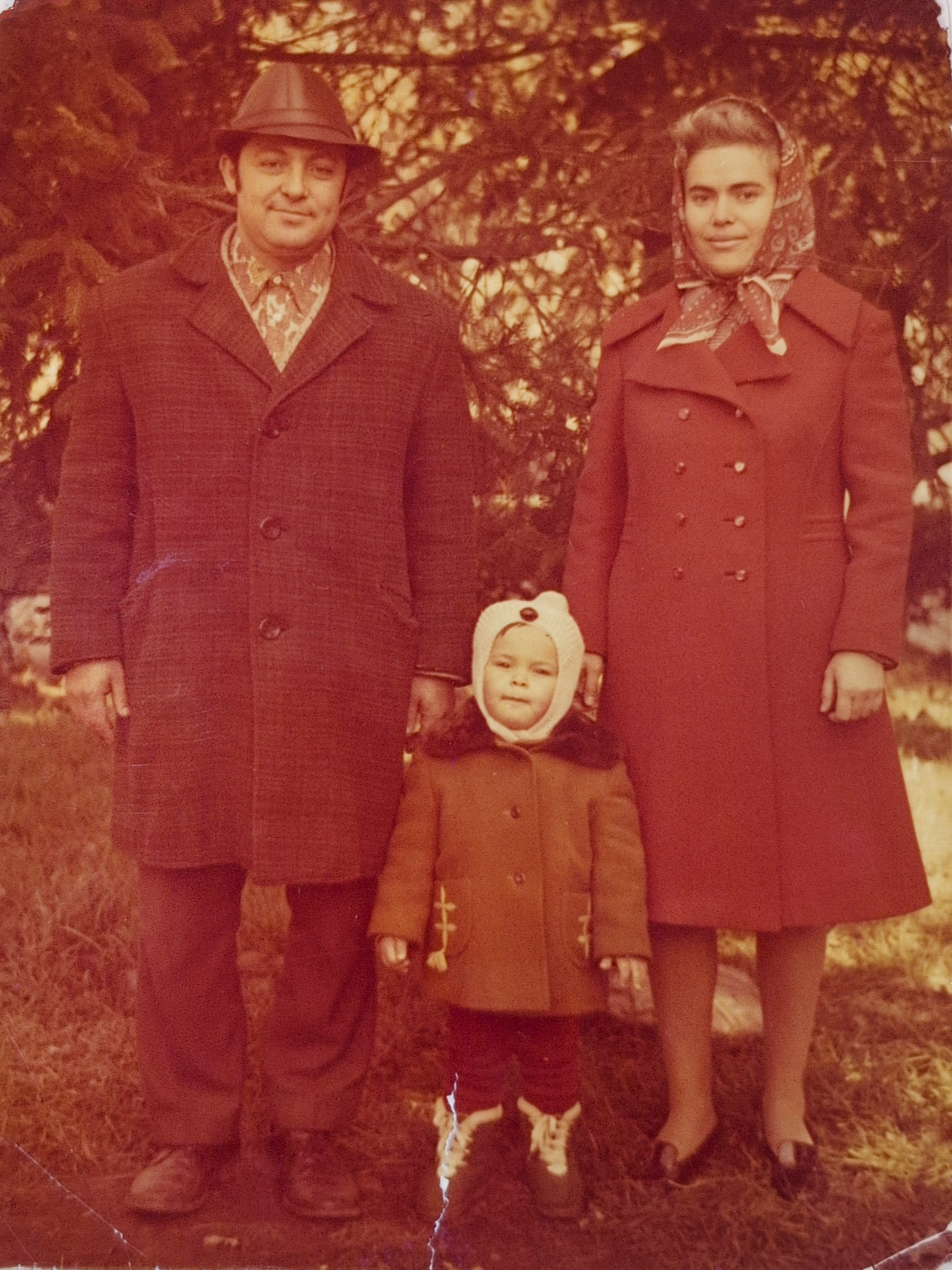
And it just reminded me: when I was 5 and a half, we left. It was very, very difficult, but my parents made the decision. My grandmother and my aunt had moved their family to Israel a couple of years before. And then we finally had the opportunity to leave. And it was trains, planes, and automobiles. We had to take a train. I think we ended up going from Odessa to Austria, where we spent several days. But I do remember, as a 5-year-old, my parents were lugging suitcases with pots. They weren’t allowed to take very much, but some sheets, some pots, enameled cups and things like that. My father’s dragging... by the way, these suitcases did not have wheels. It would have been very nice if you could have wheeled your suitcase. And I remember it falling on his foot, and he was injured, and it was so traumatic and it was so scary.
And I remember we had to cross some border, border control, and we could bring nothing. No gold, no anything. And I had a pair of earrings with these rubies in them. And my mother gave them to me and said, put them in your pocket. You’re gonna walk across the border with them. She’s like, they’re your earrings. Just put them in and don’t touch anything. Don’t say anything. Just go. And I kept those earrings, and they were one of the only things we were able to bring.
And I’m sure the story is slightly different. And actually, my mother is going to speak on a panel with us in Vermont in a couple of weeks. So maybe she can remember this story better than me. But I do remember that feeling of extreme terror, but also a desire to break free of it and take a piece of contraband with me that belonged to my family. That’s the thing. Nothing belongs to you.
“That’s the thing. Nothing belongs to you.”
KEN: Yeah, well, I think that’s a good point. So many families that I’ve spoken to relate the same thing. When they came out, they were basically robbed at the checkpoint. They could not take anything of any value. The guards took everything from them. I’m sure they’re saying it was confiscated by the state, but no, the guys were just robbing you. The state already got everything in your house before you left that they could find. And the final shakedown was at the border, every single time. And again, this is this great socialist system where everybody takes care of everybody else, and it’s just such a sweet place, and they do all these great things for people, but yet they rob their people when they go anywhere.
NATALYA: And that’s happening here in New York City. We’re paying... California, you’re paying in different ways. You’re being robbed, right? There are the fraud rings, for one thing, that are sanctioned by our state governments. But also, we’re paying insane amounts in taxes and gas and energy prices. And where is that money really going to? It doesn’t make our lives better. In fact, I’ve lived in my apartment in New York City for 29 years now. And every year in the past decade, my life has gotten more difficult. It’s gotten dirtier. There’s been more of a mental health crisis. The quality of life has gone down precipitously. And our prices have gone up.
KEN: Well, think about too, I’ve heard both California and New York, and I think New Jersey too. When people like you have had enough and they’re going to leave the state, they’re trying to pass laws where they’re going to take some of your money before you’re allowed to leave. Or take an exorbitant amount of taxes, just so they... they don’t want you to... it’s almost like an electronic barrier now, like the fence was during East-West Germany, where they’re gonna rob you like they did your family before you can leave their states, if they pass these laws.
“It’s almost like an electronic barrier now, like the fence was during East-West Germany.”
Same principle and the same mindset that’s driving what the Soviets and the East Germans and all the socialist countries did. It was exactly that model. You’re going to leave, but you’re going to leave with nothing, because all of it’s the state’s.
Something positive
NATALYA: So dire. So before we end this, give me something positive. An activist or an organization or a book or something positive that we can look to, to model where we need to be going.
KEN: Yeah, so I think what we need to be doing are some of the things like Florida and Texas are doing. They’re now requiring educating K through 12 on this topic, and I think that’s very positive. I think you got to be really careful, even in states like that that are conservative, or at least want to really teach history the right way. You can’t just go tell the teachers, go teach this, because without any type of training or resources, some of them have nefarious intentions. So some of them will use that as an excuse. Well, you told me to teach about communism. That’s what I’m going to do. I’m going to teach these kids how to be a communist. And I saw a blatant example of that. We don’t have time for that, but maybe in a next podcast. That’s exactly what teachers did. And I saw it full on from what I was getting from these students. So I think you have to be really careful there.

So Jen and I, we’ve created a children’s book for kids ages 6 to 10. We’ve seen a lot of these books, just like this little Rosa book, another one that’s P is for Palestine, that I is for Intifada, and talks about that at a kid level. So we decided to create this book called A is for Authoritarian, and we’re going to talk about the ABCs of socialism. We’re using a story based on some things I experienced when I lived in Estonia. It was also a former Soviet republic, and we have that story. So that’s going to come out now. We’re talking to publishers now, hopefully out in a couple months.
NATALYA: Oh, great.
KEN: And then we’re going to create a series of historic fiction adventure books where these two kids travel back in time trying to stop socialism from ever happening. And we’re going to go visit Marx, Lenin, Stalin, all the famous despots, and kind of get an idea what that was all about, trying to solve it, and then see what happens. So that’s part of it.
I think also, as parents, be like Natalya. Get involved. Go to your schools. Hold people accountable. But also, when you go to school and you see something going well, then by all means, sing the praises of that great teacher as far and wide as you can. Also be involved in the school boards. Hold these people accountable. I don’t know what the laws are in New York or other states, but I know a lot of states, you can go in the classroom anytime you want to as a parent. You ought to exercise that right, to figure out what’s really going on. You got a glimpse of what it looked like during COVID. You might want to go get another glimpse when you get a chance. But again, not to look for bad or other things going on, but to go find good teachers and kind of help elevate them.
NATALYA: And talk to your kids at home all the time. They have to have dinner with you. Dinner is non-negotiable, right?
KEN: Yeah, I think that’s the key point. That’s why we got involved in certain things, because we found out what our daughter was reading one time, and it just infuriated me and terrified me. So you really got to explore that. You got to get them to talk. And they’ll say, what? I don’t want to talk about that. Well, then you really ought to be worried at that point.
NATALYA: One thing that a friend of mine did, whose son goes to public middle or high school in New York City, which I thought was really interesting: her husband is a Soviet immigrant, and they found out that their son was reading Ibram Kendi, and that’s all they talked about in whatever class. And they knew that they couldn’t get them to stop reading the book, right? So what they demanded was that if they’re reading a book like that, they read a partner book from an opposing viewpoint, and at least force a conversation. And I think that’s a fair thing. It’s hard to argue against, right? If a teacher’s so confident in her or his views, why not present both viewpoints?
KEN: Right. I think that’s fair. I think that’s a great way to do it. But I would also say, if you find a book like what prompted us, that is just so sexualizing your kids, that’s got to go. And we just decided our kid will not read that book, period. We’ll find one that they can read. And that’s another story. But I think parents getting involved, just really working in this system, trying to make it as viable as possible. But talking to your kids is crucial. I mean, crucial.
NATALYA: Absolutely. And talk to other parents too. Don’t assume parents know anything they don’t. So just find the Soviet immigrants and the immigrants of totalitarianism in your yard. That was a saving grace for me during COVID. I suddenly wasn’t hanging out with the American-born moms. I was hanging out with the Venezuelan. And I’m really seriously telling you, this is exactly who I started hanging out with, just by accident, because we all had the same views. It was the Venezuelan, the Hungarian, the Romanian, the Polish, the South Korean. And we all suddenly were standing together, and we’re like, wait a second, we’re the only ones who are opposing these mandates in the schools. What’s going on? I don’t even know you. So those are the people who really understand and will actually take the risk of speaking up, because they know what they don’t want to go back to.
KEN: Exactly. That’s exactly right. So again, if you want to hear more stories like that, go to VOC’s website and go to the Witness Project, and you’ll have a long list of videos you can watch of these folks telling their stories. And they’re truly heroes, some of them. So I think you’d find that interesting.
NATALYA: Yeah. And as a bonus, Hawk Jensen, who worked on 15 DAYS with me, directed several of these Victims of Communism films, and they were amazing. I saw them before we brought him in for 15 DAYS, and that was really what sold us. So he’s amazing. Ken and I and James Lindsay and a bunch of amazing people are gonna be in Vermont October 2nd and 3rd, in Middlebury and in Burlington. I’m gonna post all the information here, but you can come and hear us speak and watch 15 DAYS and see some of the VOC films and keep the conversation alive. So thank you so much, Ken, for your time.
KEN: Thank you.
NATALYA: I love talking to you. Could do this all day.
KEN: Me too. I know, I know. It just needs more time. So we’ll do that. We’ll do it again.
NATALYA: Definitely. Okay. Thanks so much. Have a great day.
KEN: You too. Bye-bye.
Come hear us in person. Ken, New Discourses James Lindsay, and I are screening 15 DAYS and speaking together in Vermont in two weeks!
Friday, October 2 — a private dinner and screening in Middlebury, with Ken, James Lindsay, Jennifer Richmond, and me. Tickets here.
Saturday, October 3 — the United We Stand Media Fest in Burlington, 1:00 to 6:30 p.m., ending with a screening of 15 DAYS and a panel. Tickets here.
Did you grow up around anyone who lived under communism, or who got out? Would love to hear your story in comments!


