


Last week’s piece on the Random House Landmark Books going out of print hit something. Thousands of you read it, shared it, and wrote in. Grandparents who remembered exactly where those books sat on the shelf. Homeschooling parents who recognized every title. Teachers who said the books had been gone from their classrooms for years with no explanation.
You weren’t just responding to nostalgia for good books. You were recognizing a pattern.
The Landmark Books weren’t canceled. Random House just stopped printing them, schools stopped assigning them, and one day they were gone. That is how most of the dismantling has happened. Not by proclamation, but by omission.
Here’s what else went the same way.
Recess
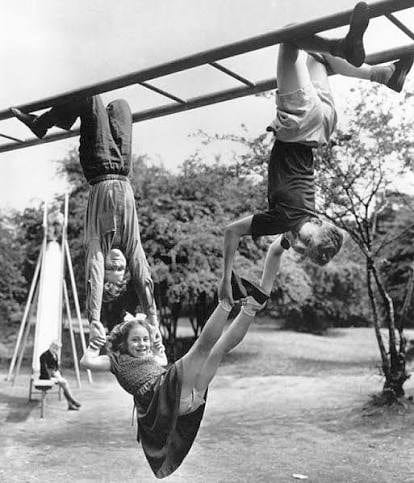
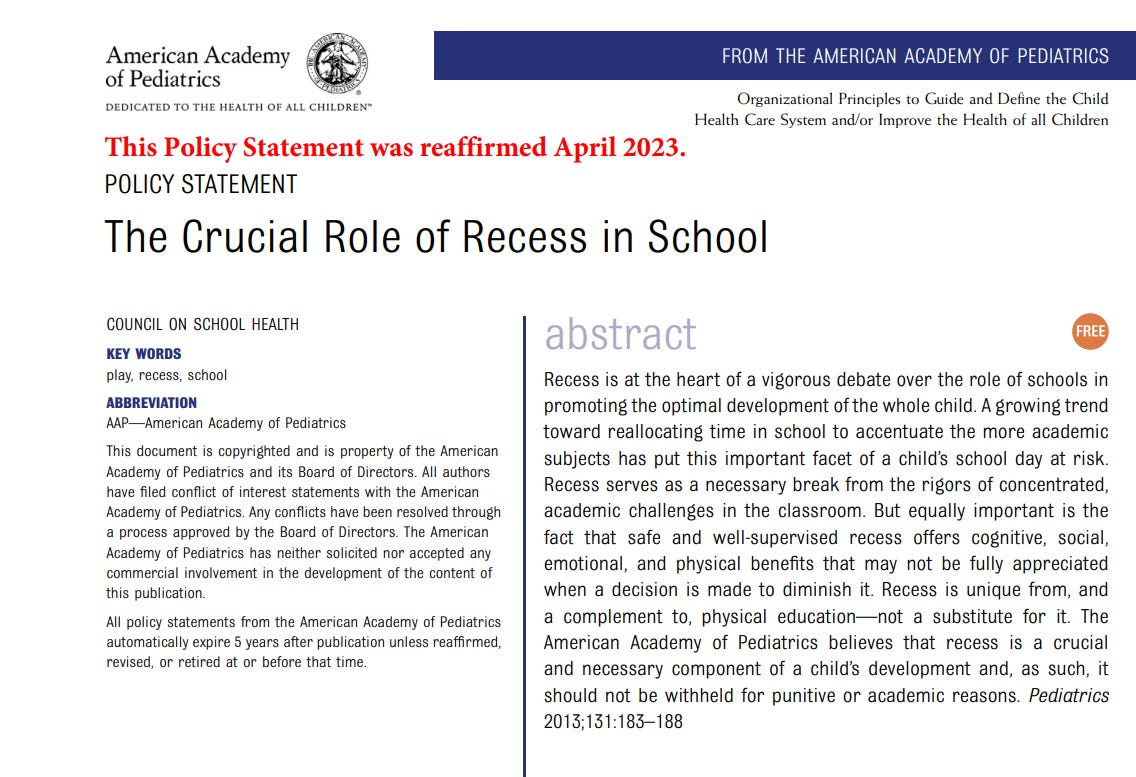
Since 2001, average weekly recess time in American schools has declined by 60 minutes. As many as 40% of school districts cut recess following No Child Left Behind. Chicago eliminated recess from most public elementary schools for nearly three decades. The American Academy of Pediatrics had to issue a formal policy statement in 2013 arguing that recess is “a crucial and necessary component of a child’s development”, because by then it had become necessary to argue it.
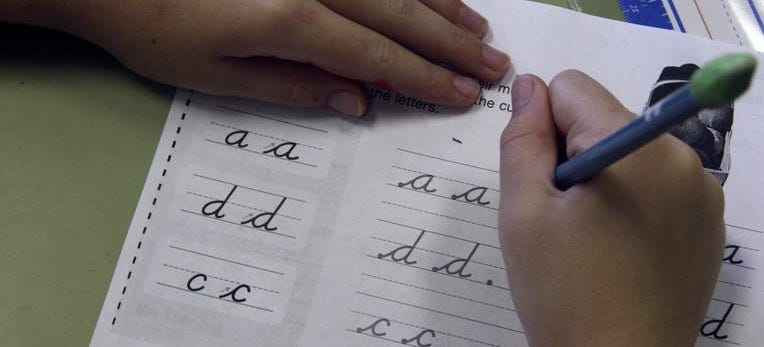
Cursive Handwriting
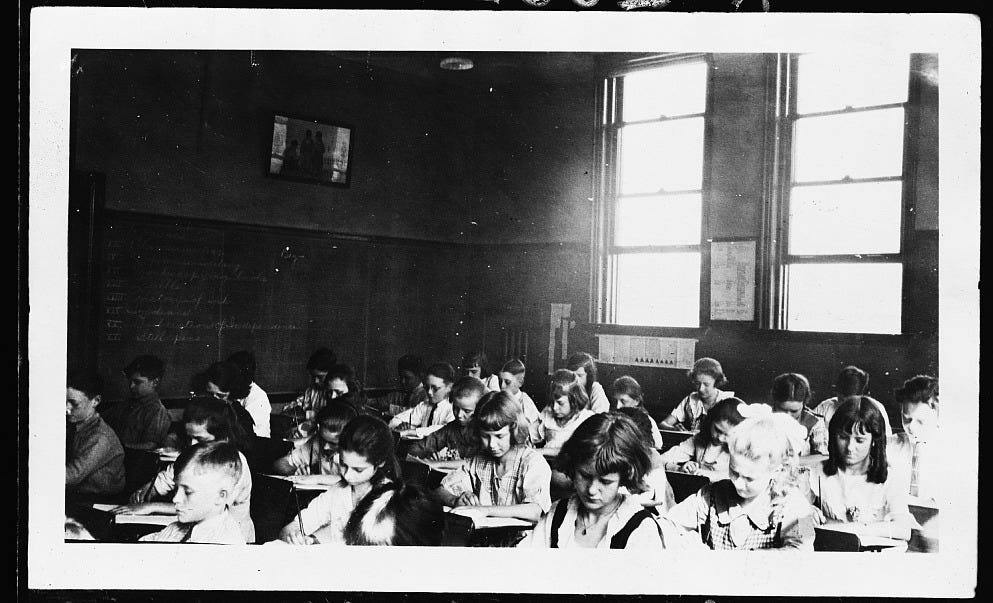
The Common Core State Standards, adopted in 2010, removed the requirement for cursive and replaced it with keyboarding. By the mid-2010s, 41 states had adopted those standards and cursive largely disappeared from classrooms. A child who can’t read cursive can’t read the Declaration of Independence in its original form, or a letter from their grandmother. Twenty-seven states have now passed laws mandating it back — which tells you how far it had gone.
Shop Class and Vocational Training
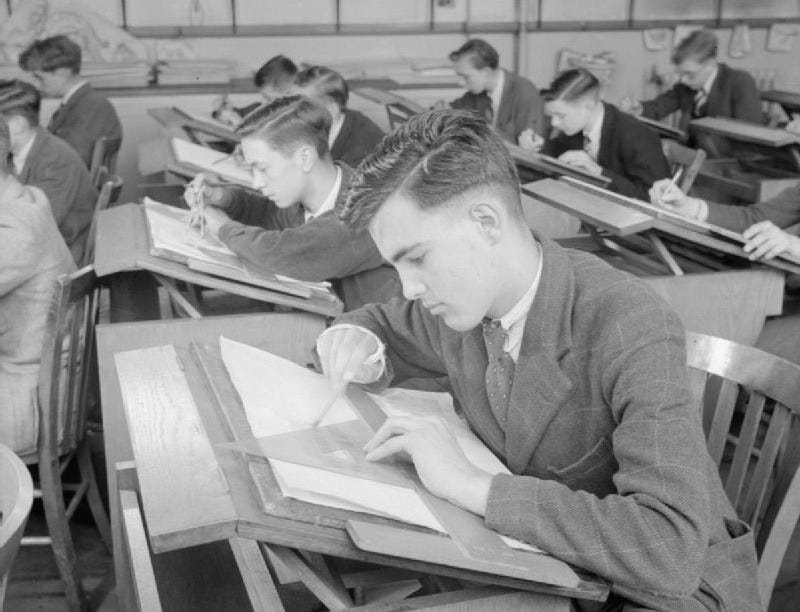
In the 1970s, shop class was taught in nearly every public high school in America. Between 1990 and 2009, the number of vocational credits earned by high school students dropped 14% as schools pushed every student toward a four-year degree. The result: the U.S. construction industry now needs 500,000 additional skilled workers per year just to meet demand, and Deloitte projects 2.1 million manufacturing jobs could go unfilled by 2030. Nobody who made those curriculum decisions will be held responsible.
The Teaching of Reading
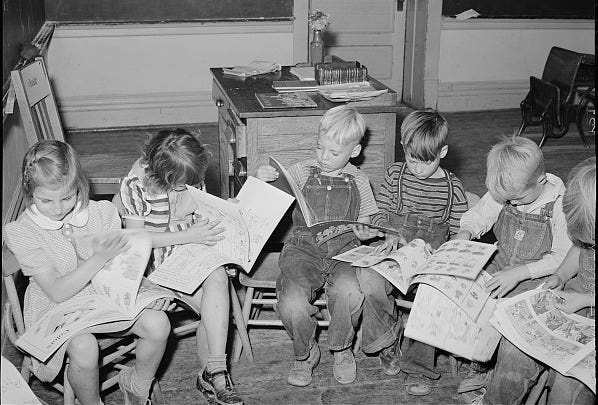
For decades, many American schools moved away from systematic phonics toward approaches that assumed children would absorb reading naturally from immersion in text. California went all-in on this approach in the late 1980s, and reading scores fell sharply enough that lawmakers launched an investigation. Bill Honig, the California Superintendent of Public Instruction who championed the approach, later admitted before the legislature that it was “not a good strategy to teach kids.” States have been cycling through variants of this fight for forty years. The science of reading movement only began gaining serious legislative traction after 2020. An entire generation of children learned to read with methods teachers had already been told didn’t work.
History Told as Story
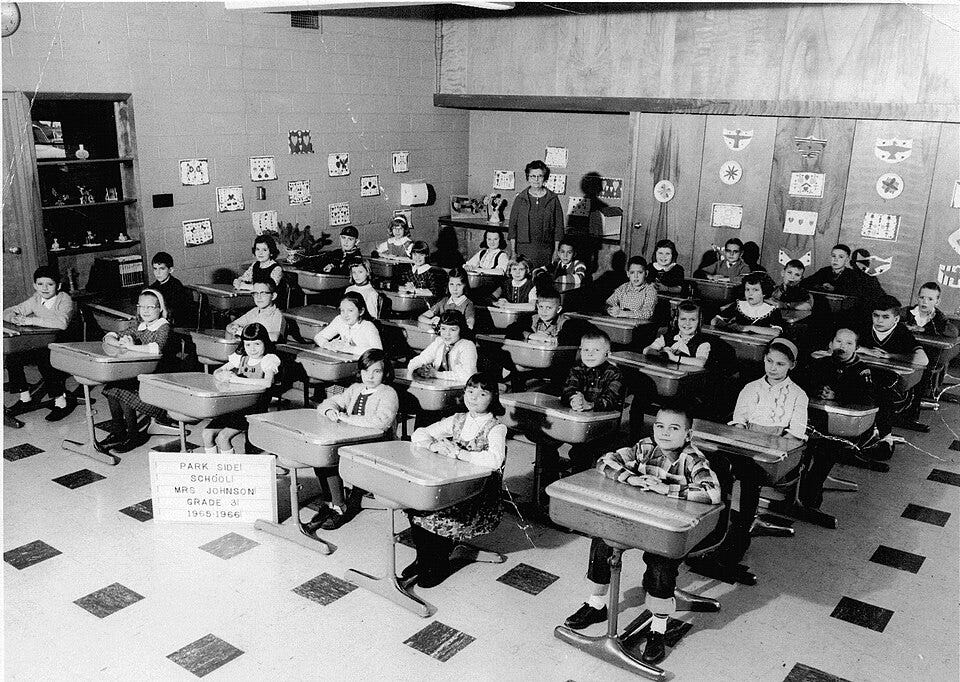
The Landmark Books taught history the way it was taught for centuries: as narrative, as biography, as the record of specific people making decisions under pressure. Children were trusted to inhabit those stories and judge them for themselves. Laura Ingalls Wilder’s name was removed from the American Library Association’s children’s literature award in 2018, and her books have been quietly dropped from required reading in many districts. Johnny Tremain, Sign of the Beaver, the American Heritage Junior Library — technically still available, functionally gone from classrooms. What replaced them in many districts are texts organized around systems and frameworks. Frameworks can explain patterns. They cannot make a child care about what happened. Story does that.
And Then They Closed the Schools
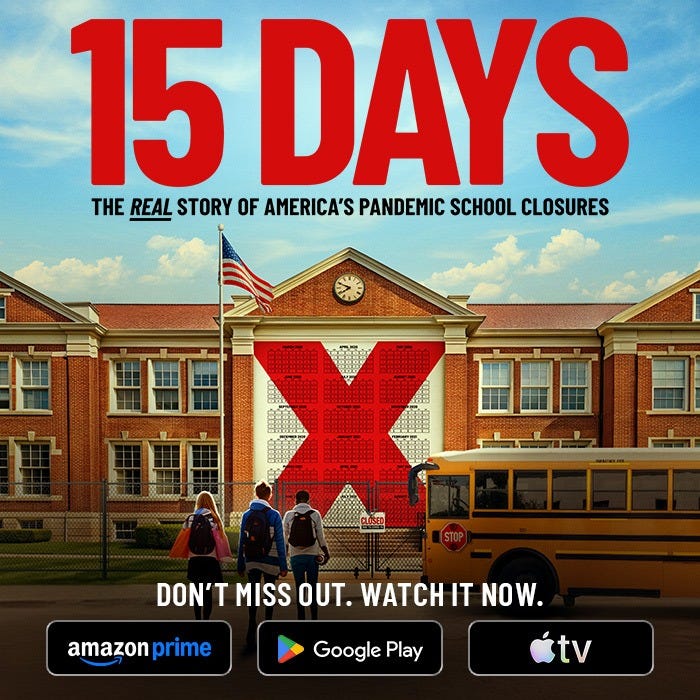
The school closures of 2020 were the most visible and most documented version of this pattern.
Nobody voted to close the schools for 15 months. No parent was consulted. No study was cited showing that children would come through unharmed. Union leadership, mayors, and public health officials decided and enforced it.
When parents pushed back, they were told to trust the experts and wait.
15 DAYS documents what actually happened: who made the decision, what evidence they dismissed, and what it cost the children who had no say. Dr. Jay Bhattacharya, now NIH Director and interim CDC Director, told us on camera what the science showed while the closures were still in effect. So did Dr. Scott Atlas, Ron Naclerio, Maud Maron, and dozens of others. The film is streaming now on Apple TV, Amazon Prime, and Google/YouTube TV, six years after the fact. Thousands of people are watching it because they are still trying to understand what happened to their schools.
The closures didn’t come out of nowhere. They came from institutions that had spent decades making decisions about children without asking parents first. Removing books. Cutting recess. Dropping cursive. Eliminating shop class. Replacing proven reading instruction with ideology. Each decision was made by people who believed their judgment about what children should have access to was more reliable than the judgment of families.
The pandemic just gave those institutions their biggest opening yet.
What’s Coming Back
The good news is real. Twenty-seven states have passed cursive laws. The science of reading is winning legislative fight after fight. Classical schools are the fastest-growing sector of K-12 education. Homeschool enrollment has more than doubled since 2012. Hillsdale College’s 1776 Curriculum — a complete K-12 American history and civics program built on primary sources — is free to any school or family that wants it.
Parents are not waiting for permission anymore.
Restore Childhood is a 501(c)(3) nonprofit dedicated to protecting children’s education, health, and parental rights. Support our work at restorechildhood.com/donate.
Dear Natalya,
My niece, who lives in NY, taught herself cursive. Then when she came to visit me at Cornell she could read E. B. White's hand written manuscript of Charlotte's Web and the Bancroft copy of The Gettysburg Address written by Abraham Lincoln himself. What a loss it would have been if she could only stare blindly at these two gems.
Thanks,
randy
How did we let this happen? This seems to be from a movie scrip but sadly it's true. Society is broken