


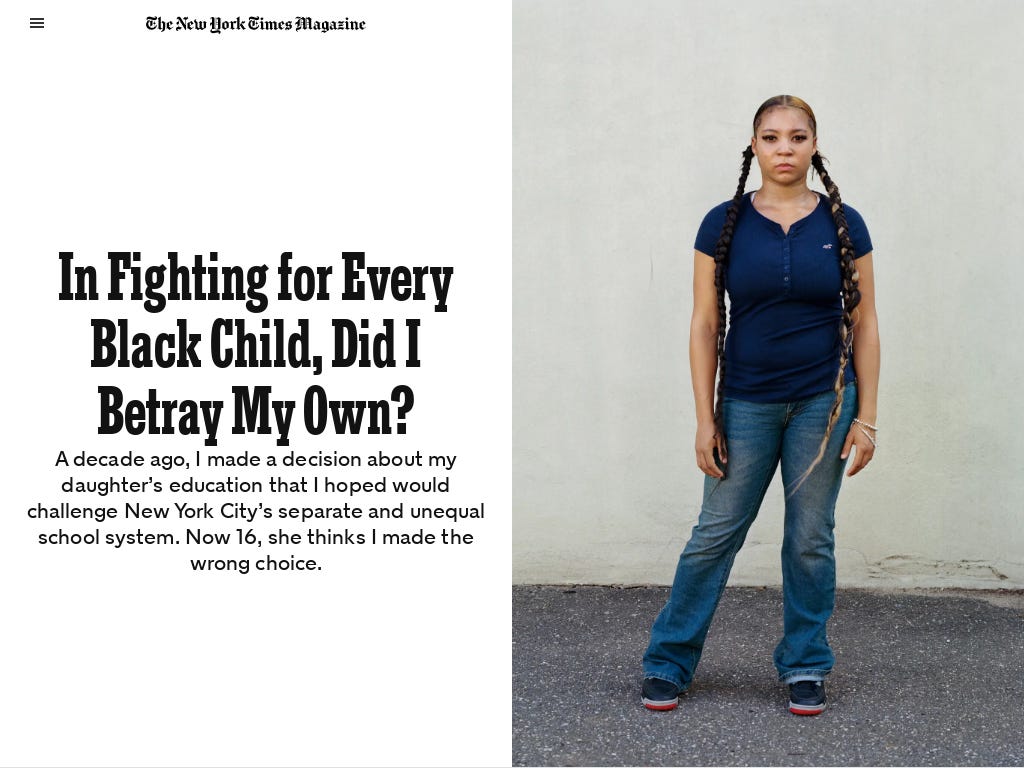
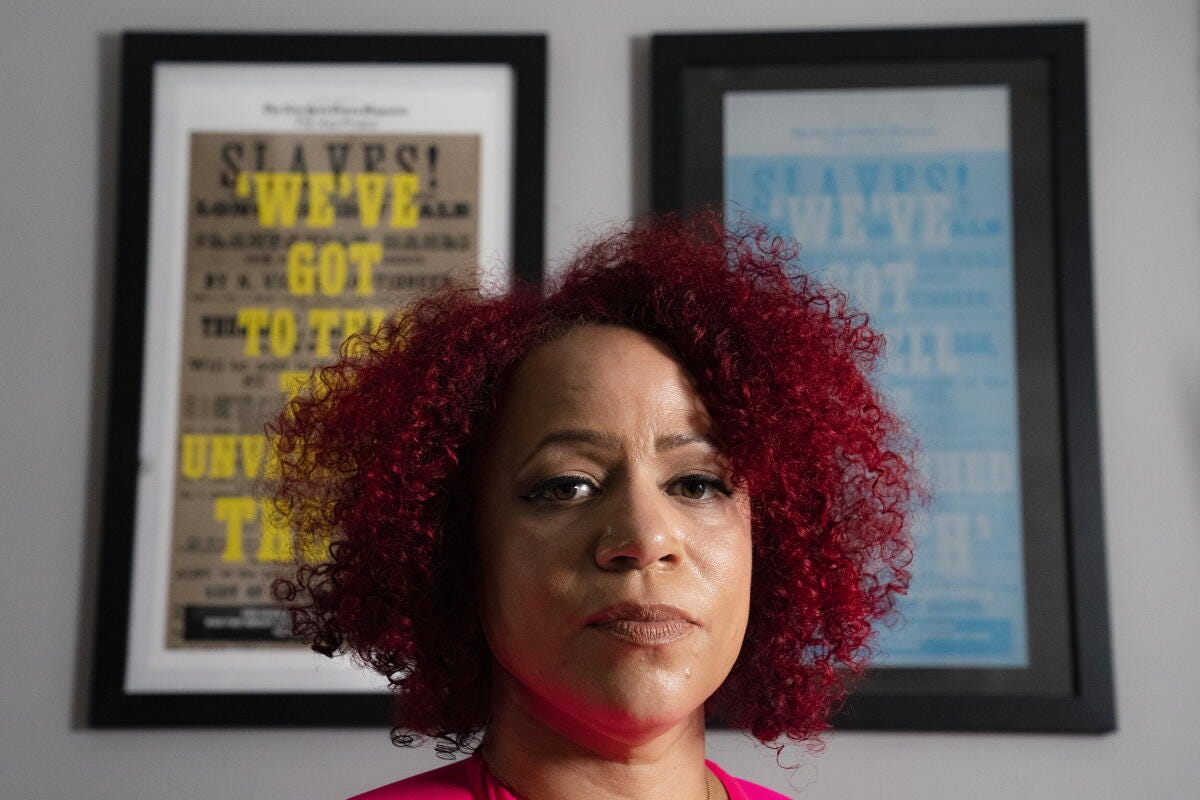
Yesterday New York Times journalist and author of the 1619 Project Nikole Hannah-Jones published a new essay in the New York Times Magazine, titled “Fighting for Every Black Child, Did I Betray My Own?“
Her daughter Najya is 16 now. In the essay, Najya tells her mother, “I never really got the education I wanted.”
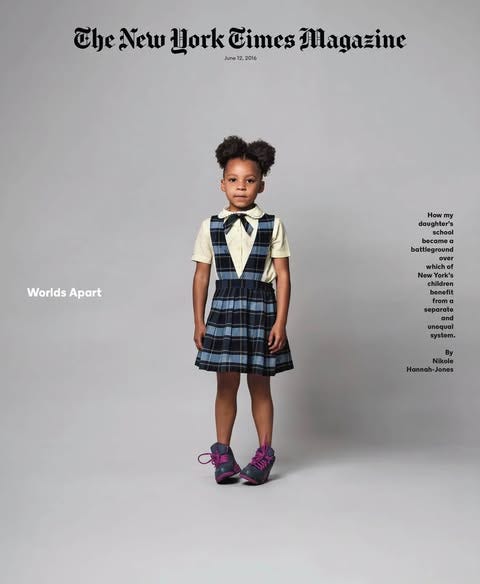
Hannah-Jones and her husband enrolled Najya at P.S. 307, a high-poverty Brooklyn school, in 2015, then at a middle school called Urban Assembly Unison. She writes that the family “had connections and time and status that should not matter, but that we all know do.” She picked the low-income school on purpose, believing that families like hers moving in would improve it for everyone.
Najya struggled. A tutor later found gaps in her long division and fractions. She earned A’s in a class she barely understood, because her teacher never checked her homework. In eighth grade, Najya asked to choose her own high school for the first time, and she picked a screened, mostly white and Asian school, the kind her mother had spent a career arguing against.
Hannah-Jones writes about the phone call where Najya asked why her mother hadn’t thought about her instead of other kids. Hannah-Jones answered, “I feel like you got cheated. And I’m sorry for that.”
She goes on: “This girl, my only child, looked to me to protect her, to give her what she needed to thrive. And I had not chosen her.”
Jones had picked her cause over her daughter.
But she doesn’t end there. Her closing line asks every parent who has moved a child out of a failing school to share her guilt: “there is no absolution here. Not for me. Not for you. Not for any of us.” Even now, watching what it cost her own daughter, she cannot admit that the right thing to do was always, always to choose her child.
“This girl, my only child, looked to me to protect her, to give her what she needed to thrive. And I had not chosen her.”
How can you not help noticing a pattern here?
A vocal minority shame parents wanting good schools, destroy those schools, and they build nothing in their place. Maud Maron ran into this exact ideology in 2020, when Hannah-Jones interviewed her, then piled on her online for a line pulled out of context. My film Uncancellable looks at the costs of standing up to this bullying, the silencing of parents, shaming us into staying quiet, with no improvement to the students or their schools.
“I was personally exposed to the pitfalls of this ideology after New York Times writer Nikole Hannah-Jones asked to interview me. She had heard me testify at a City Council hearing, where I said, “Parents who disagree with [Chancellor Richard Carranza] should not have to be called racist all the time.”
Our interview lasted 90 minutes and covered a range of topics, but she and others in the toxic Twittersphere took offense at my suggestion to listen to other parents’ viewpoints, “even if you think it’s racist.” That bit was snipped out of a much longer answer about the importance of integration efforts and the role of school choice.
Naturally, the Twitter mobs descended on me.
After I explained my thinking and provided context on Twitter, Hannah-Jones tweeted in response that it was “disingenuous” of me to refer to specialized high schools as “majority people of color,” when they are actually “Asian.”
Maud Maron writing in New York Post July 23, 2020
Who does that benefit? Not Najya. Not Maud’s kids. Not one child sitting in a New York City classroom right now.
New York City is putting a record $43 billion into public schools this budget, which works out to roughly $44,000 per student, more than any other large school district in the country.
There is no honest excuse for a teacher who never grades a fourth grader’s homework, or a school that cannot staff a lunchroom.
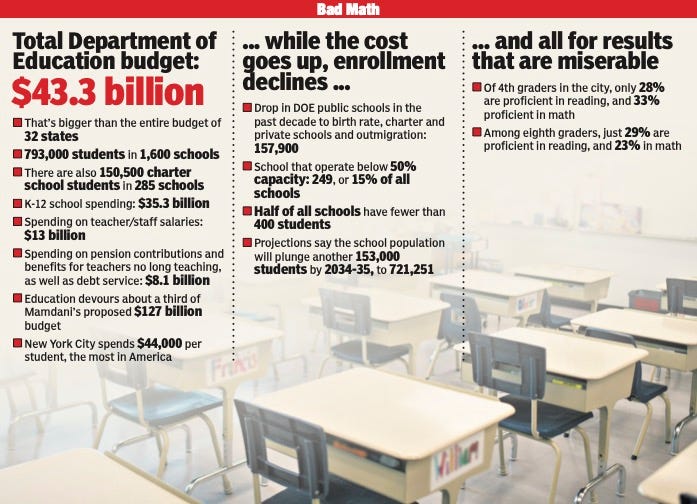
And this month, the state made it worse. New York is phasing out the Regents exam requirement for graduation, starting with the class of 2028. Najya’s whole story turned on a hard number: a reading assessment, a failed algebra exam, a test score she couldn’t hide from. Remove the test, and no one will learn she was never taught long division until a private tutor catches it in high school (!).
Not only are we not fixing what happened to Najya, we are making sure the next child in her old classroom never even gets the data to know it happened to her.
How does this help anyone, Nikole?
It is not selfish for a mother to choose her own child first - it is right, it is nature!
It is the way a child gets strong enough to help anyone else.
Every person is a world, and you build your own before you can lift another one. Hannah-Jones had that order backwards (at best) for a decade, at her daughter’s expense, and she still doesn’t seem to be capable of a self reckoning.
Advocacy starts at home. If you cannot fight for your own child, what exactly are you fighting for? Your kids only have you, not a movement or an ideology.
When you decide not to do right by them, when you had the power to choose better and chose worse instead, that is not complicated and it is not noble. It is a choice. It is a failure.
It teaches your child that she is a sacrifice. That she comes second to a cause her mother picked before she was even born. Najya said it plainly: she wished her mother had thought about her instead of other kids.
This is the most powerful lesson in the entire essay, sadly not the one Hannah-Jones meant to teach. It is a lesson in what not to do as a parent. Love your own child best and first. Not in place of the world but because you love the world. A child who knows she comes first learns she is worth fighting for, and that is what gives her the strength to go out and fight for someone else.
Hannah-Jones took that from her daughter for a decade.
Do not take it from yours.
It’s awful Jones’ daughter’s homework was not ever checked by the teacher. It’s also a shame that Jones never checked her daughter’s homework else she would have seen problems with problems. Sad to think that with no adults checking on the girls’ progress, she may have fallen through other neglect cracks.
Here’s a big question: how did Jones think that the mere presence of high income children would make the system better? How does that make any sense?
iMHO, it’s not students with more money or schools with more money but schools with standards for the teachers to meet and resources to help them meet them.
How is it possible that NHJ had no idea of what was happening to her daughter in school? Was she paying no attention to her at all? Going over her homework with her? I think this tells you a lot about who NHJ is. The ideology is more important than the reality , especially of her daughter. She is someone who created notoriety she did not deserve , promoted by the NYT.