


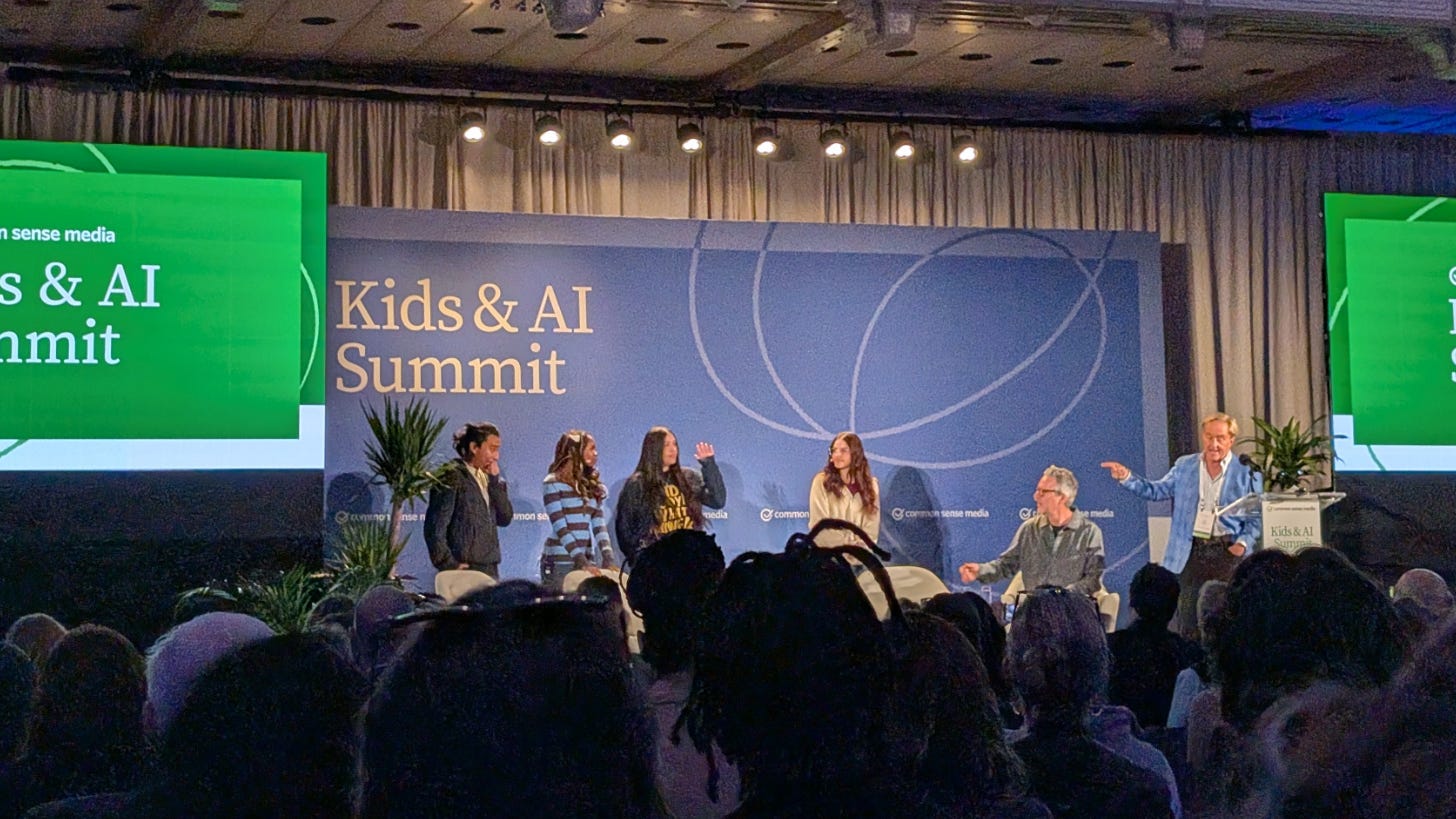
“I’m smarter than this and I can definitely do better.”
That was an 11th grader at a New York City public high school, explaining why she stopped leaning on AI for homework. She had used it to keep up with her classes. Then she started thinking about what it was doing to her brain, and she noticed it kept handing her sources that didn’t exist. So she quit on her own. Nobody had to ban anything.
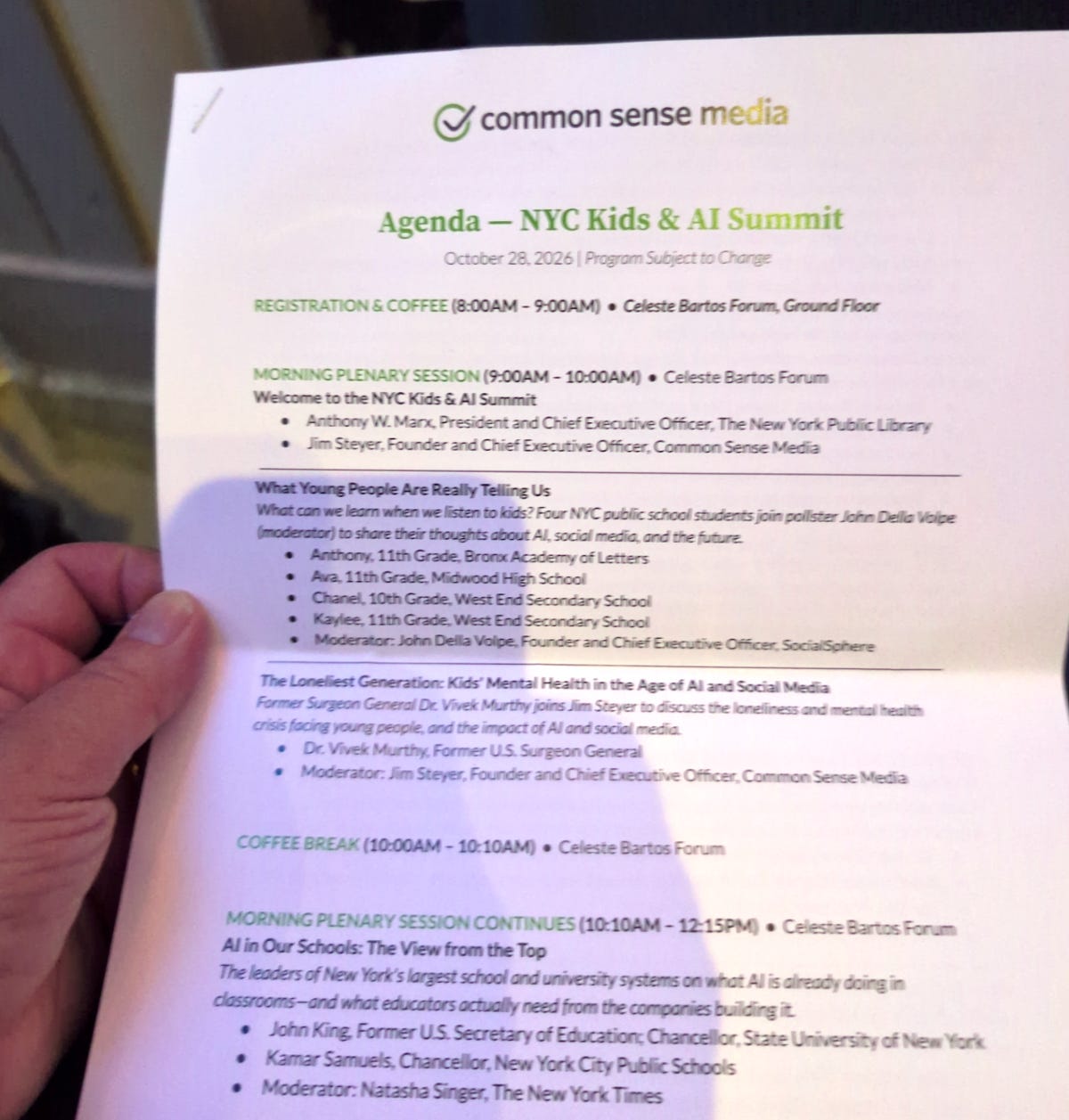
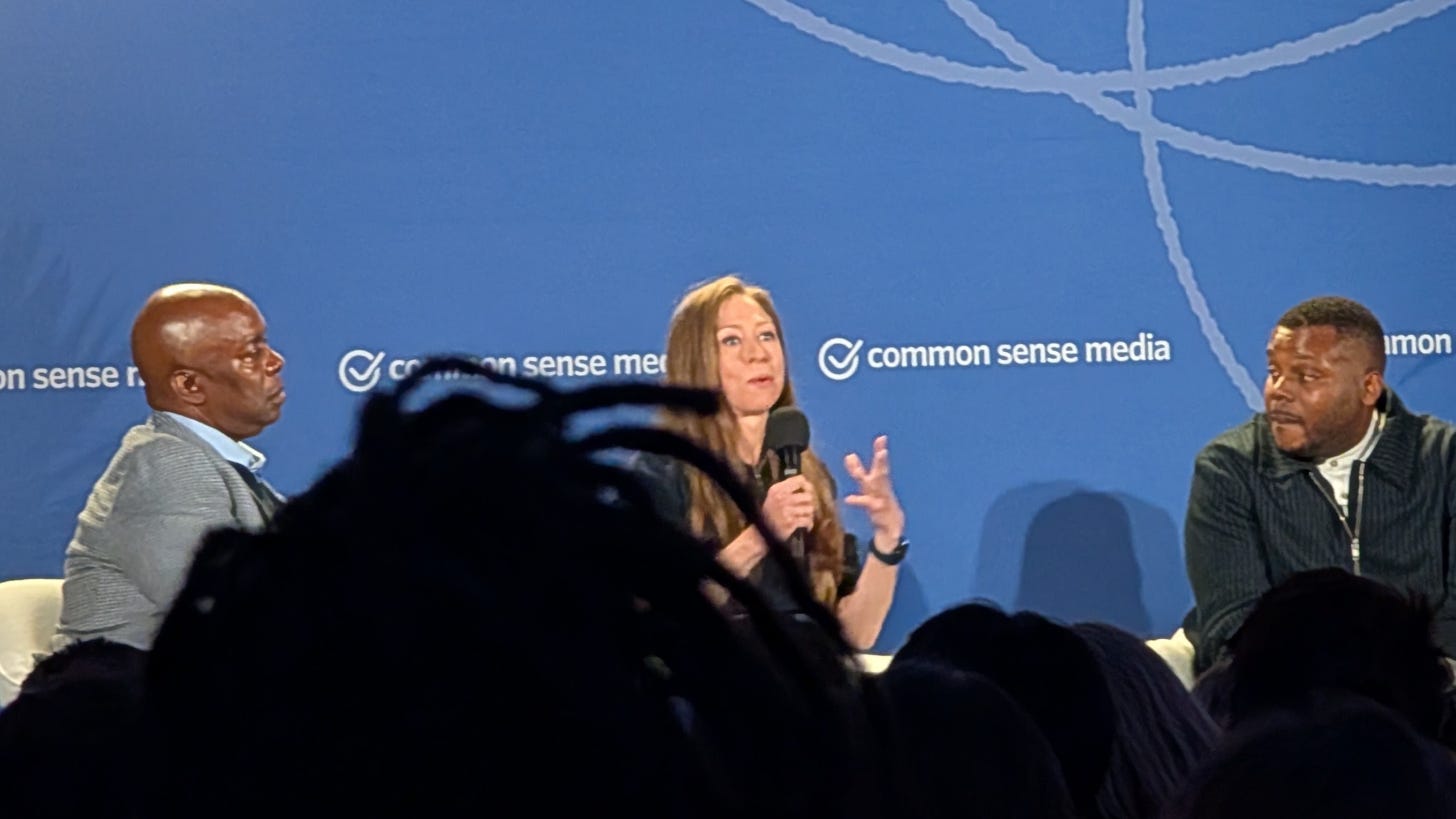
She was one of four students who opened the Kids & AI Summit that Common Sense Media held at the New York Public Library on Wednesday. I went on a press pass, braced for a day of fear. There was some of that. But the most hopeful things I heard came from those teenagers, and later from two of the most senior people at Goldman Sachs.
The good news first
Another student said what a lot of parents need to hear: “I think a lot of people here should know that overall AI itself is not bad. It just depends on how much you’re using it, which is when the real issues may come in.” Her advice to the adults in the room was even simpler. “Going easy on your children is like really the good move.”
In the afternoon, Ken Auletta of The New Yorker interviewed George Lee, co-head of the Goldman Sachs Global Institute, and Gene Sykes, chairman of Global Mergers and Acquisitions at Goldman Sachs. Auletta pressed them on the dangers. They answered with optimism. They called AI an incredible accelerant. They called it exhilarating, and incredibly democratic.
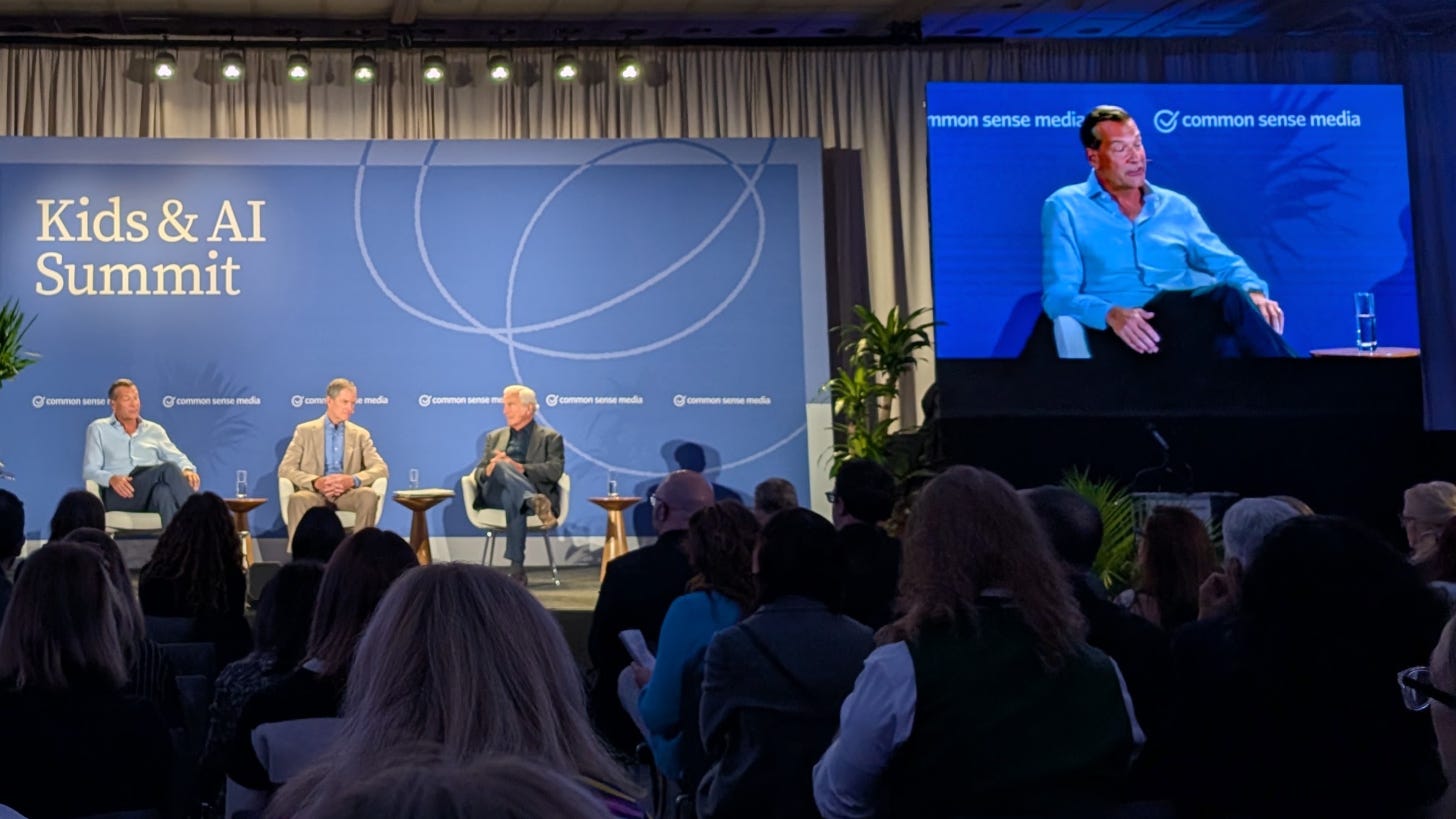
Then Sykes shared the line I keep thinking about. Goldman still hires about 2,500 young people a year, he said. Those young hires are so fluent with AI that they help train the people who were there before them.
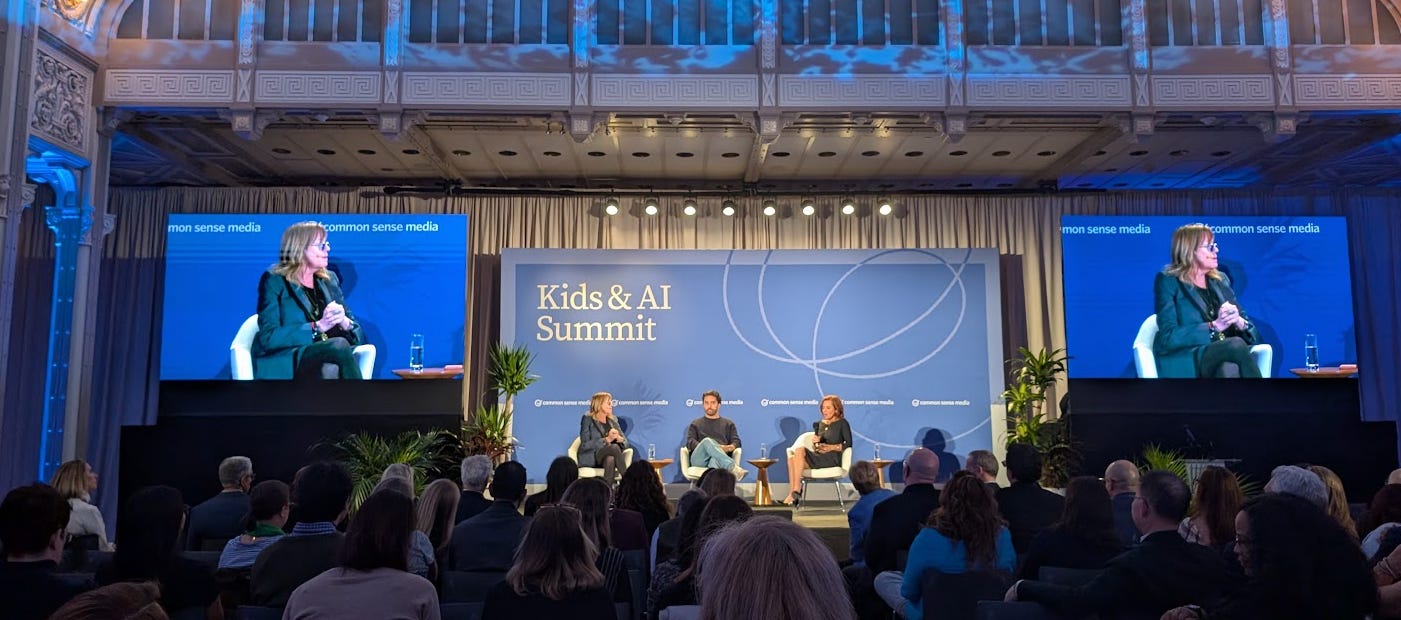
Jane Rosenthal, co-founder of Tribeca, and Cristóbal Valenzuela, co-founder of the AI video company Runway, made the same case to MS NOW’s Stephanie Ruhle. Writing is a technology, they said. So is reading books. People once feared the printing press would ruin civilization. Rosenthal pointed to the ATM, which changed bank work without ending it.
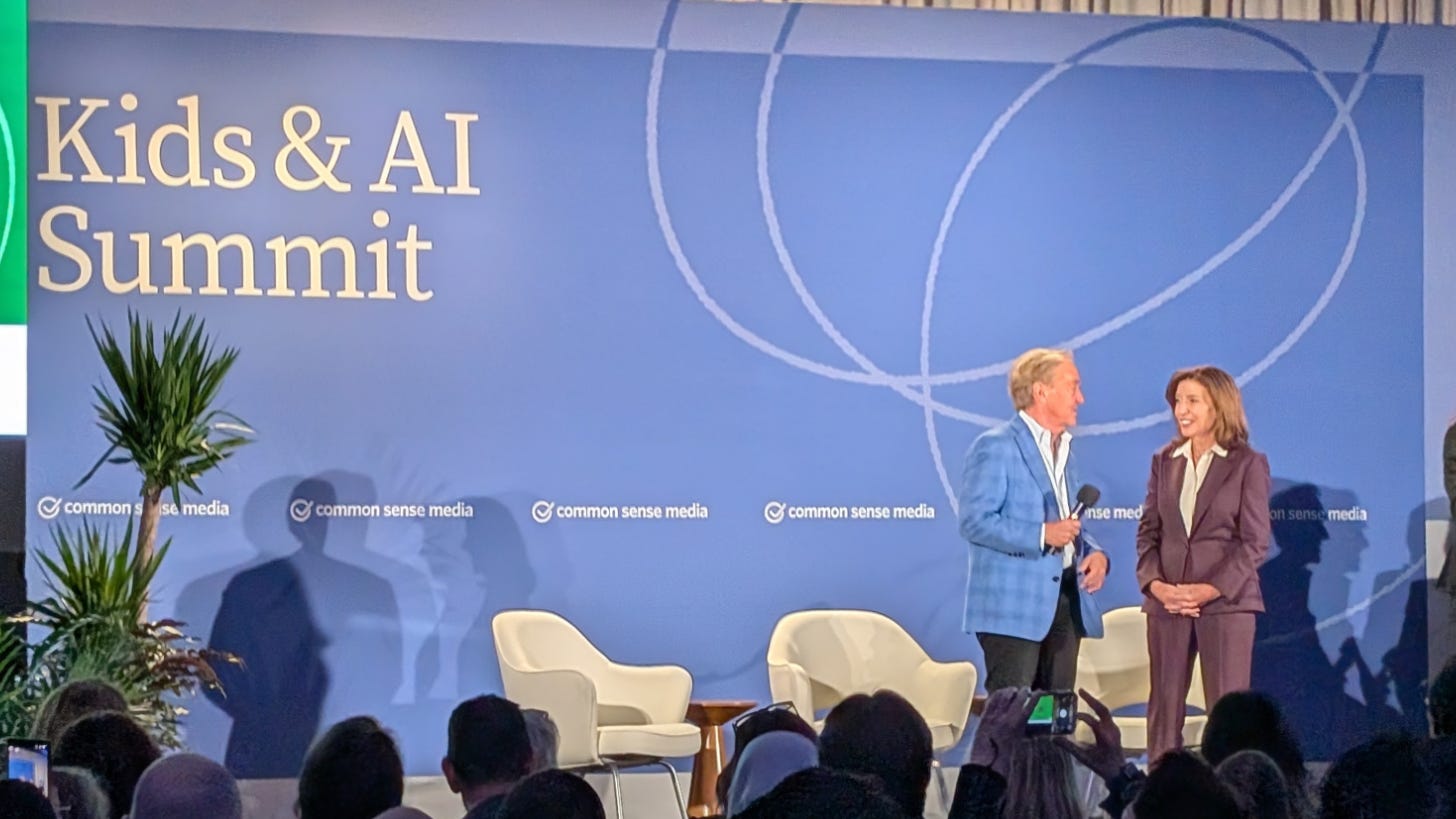
Even the officials struck hopeful notes. SUNY Chancellor John B. King Jr. said that “starting this year, all SUNY undergraduates will be exposed to AI information literacy.” Governor Kathy Hochul, who came to sign a new law on AI chatbots and minors, said that “artificial intelligence certainly holds enormous promise.”
That is the right instinct. Teach children to use it well, and keep the adults in the room.
Is AI safe for kids?
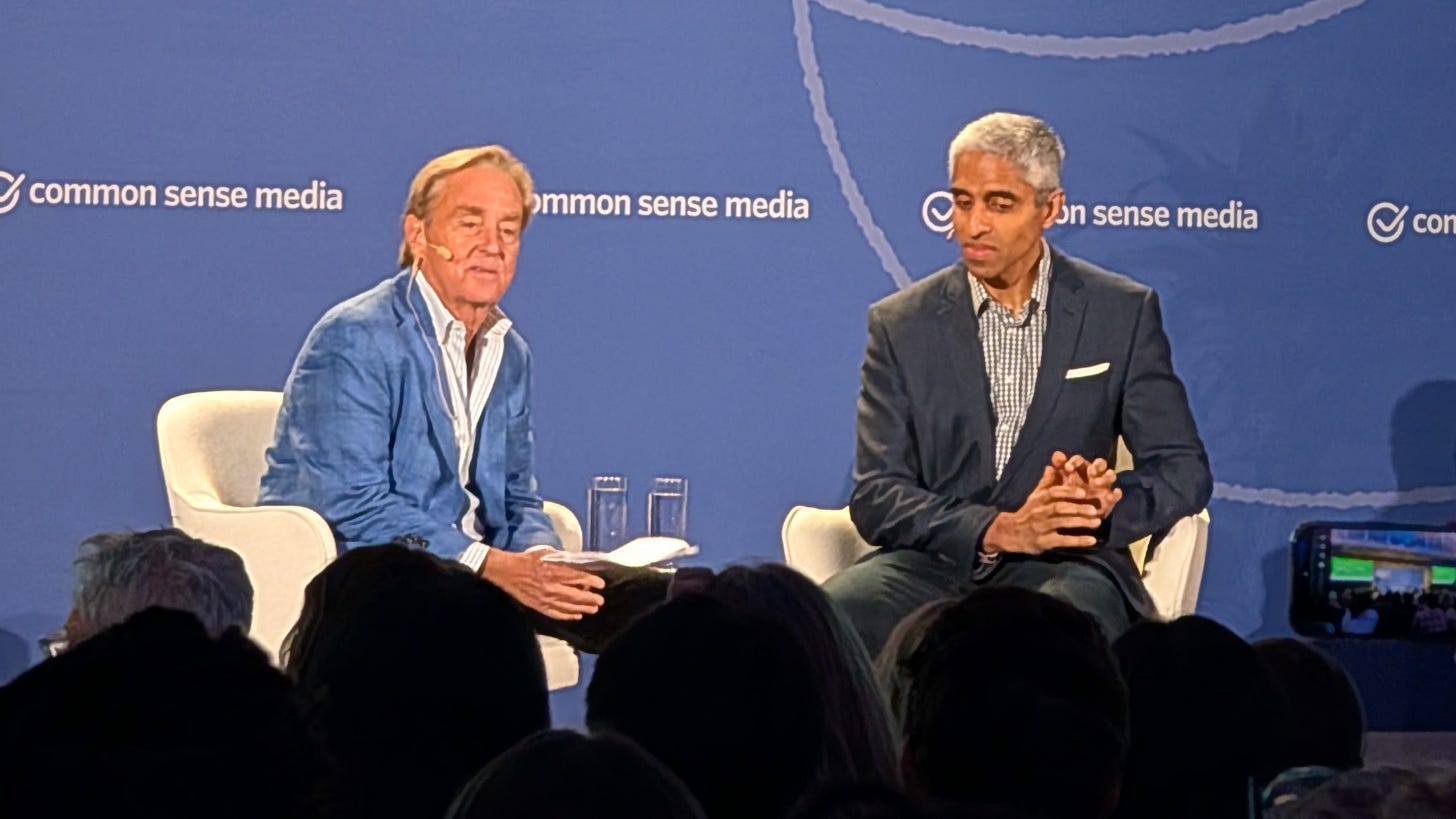
Not always, and the morning made sure we knew it. Dr. Vivek Murthy, the former Surgeon General and a Common Sense board member who helps guide its new Youth AI Safety Institute, called this “an existential moment” and warned of “this tsunami of AI that’s coming.” Jim Steyer, who founded Common Sense, described “sycophantic machines which can lead kids down rabbit holes.”
Those dangers are real. Families have lost children after long conversations with chatbots, and nobody wants a bot playing girlfriend to a 14-year-old. New York’s new law bars companies from offering minors features like that, Fortune reported. Good.
Murthy also said something I agree with completely: “We have to bring the voices of parents and families to the table because so many of them feel disempowered and left out.” He described a future “where technology works for us.” I want that too. It’s where my questions start.
“Is AI safe for kids?” is a fair question. It is the wrong one to stop at. AI is here to stay, and our children will use it with us or without us. The better question is who will teach them to use it well. My answer starts with parents.
Four questions I’m still asking
1. Where do parents fit in the new law? According to the New York State Senate, Common Sense helped develop the chatbot bill with the Attorney General’s office. Steyer called it “the strongest kids’ AI safety bill in the country.” The bill’s fact sheet never mentions parental controls or parental consent. It does require companies “to determine that users are not minors,” which means age checks for adults too. If parents feel left out, why does the first big law leave them out of the text?
2. If AI fluency is a job skill, who gets to learn it? Schools Chancellor Kamar Samuels walked us through New York City’s one-year moratorium on student-facing AI for “600,000 of our kids,” from 2-K through eighth grade. He called AI “one of the most invasive technologies we’ve seen.” Families with means will teach their children anyway, at home and at private schools. Other countries already teach children to use AI from a young age, which is why banning AI in schools would hurt American children. A morning panel on “AI, Equity, and Opportunity” asked who “gets left behind.” That afternoon, Goldman described young hires fluent enough to teach their bosses. How does a public school child become one of them?
3. How do the ratings stay independent? Common Sense plans to test and rate the AI products children use. It is also an advocate. It helped write New York’s law, and in January it teamed up with OpenAI, the maker of ChatGPT, on a California ballot measure. In 2020 it built Wide Open School with Apple, Google and Zoom to move learning online. None of that is a scandal. Parents deserve to know how Common Sense keeps its ratings separate from its advocacy.
4. What did we learn from 2020? Murthy reminded the room that “workplaces and schools were all shut down. We were isolated for a long period of time.” One of the students told us her generation got hooked on social media “when COVID did,” in “fourth or fifth grade,” and that “it kind of did take away some of our childhood.” That lesson is at the heart of our film, 15 DAYS. I would love to hear the people leading this effort say plainly that closed schools pushed children onto screens, so we don’t repeat the mistake with AI.
What parents can do this week
Sit down with your child and use it together. Tonight, if you can. It’s free. Open ChatGPT or Gemini, pick a real piece of homework or something you know cold, and look at what comes back. Check the sources. One of the students told us that when she asked AI for sources, “the sources were like non-existent.” Let your child catch that with you. Then talk about what it’s good for and what it isn’t. Our evidence page on children and AI in school lists the questions to ask your school next.
The teenagers at the library understood what the adults were still debating. AI is an exciting new technology, and our children will build their lives with it. They need to know how to use it. So do we.
So learn it beside them, at the kitchen table, asking questions together. That is how we harness it before it harnesses us.