



One of the most celebrated children’s history series ever published is gone. It hasn’t been banned, it hasn’t been burned…
It has been quietly allowed to go out of print.
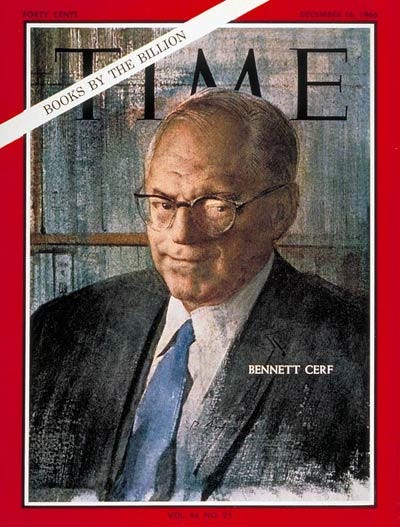
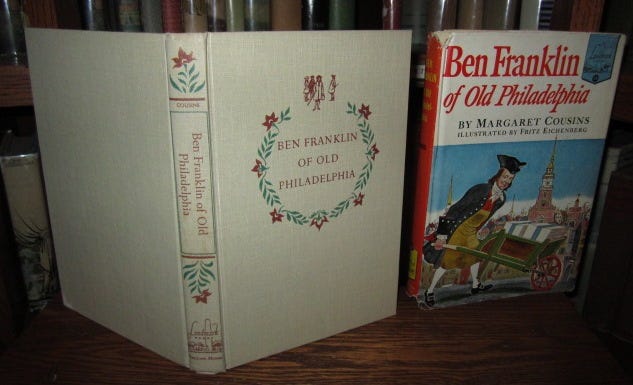
The Random House Landmark Books were the gold standard of history education for children from 1950 to 1970: 122 volumes on American history, 63 on world history, 25 oversized Giants. They were conceived in 1948 by Random House co-founder Bennett Cerf, who went to a Cape Cod bookstore to buy his son a book about the Pilgrims and was told no such book existed for children.
He decided to fill the gap himself.
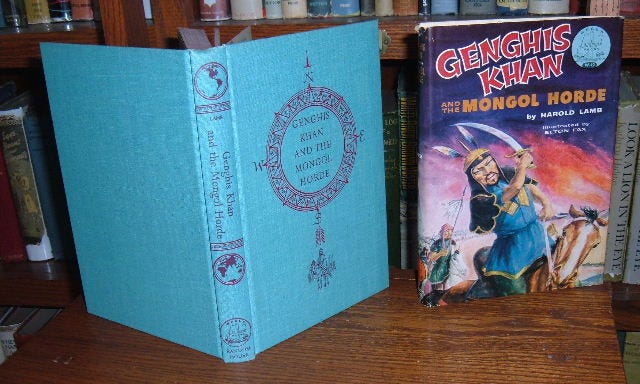
The authors he recruited were extraordinary.
Pearl S. Buck. C.S. Forester. Robert Penn Warren. Shirley Jackson. William L. Shirer.
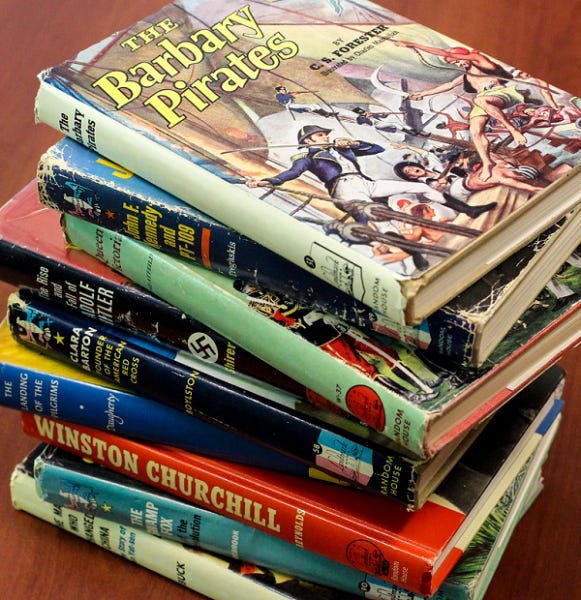
The American Historical Association later said the series “lured an entire generation of young readers” into history, including many of today’s professional historians. The books were under 200 pages, readable, thrilling, and accurate. Each volume had about 10 original illustrations, a comprehensive index, and was priced at $1.50, roughly $13 in today’s money.
The genre of history books that celebrates American achievement, Western civilization, and individual heroism without an organizing framework of oppression has become nearly impossible to find in mainstream publishing.

Random House has let most of them lapse.
About 10 have been reprinted in paperback by Sterling Point Books. The rest exist only in the used market, slowly being hunted down by homeschooling families who know what they are looking for. You can still find most of them on AbeBooks for $10 to $20 a volume.
Unfortunately, this is a pattern, not an accident.
The genre of history books that celebrates American achievement, Western civilization, and individual heroism without an organizing framework of oppression has become nearly impossible to find in mainstream publishing. The books did not get controversial. The market for them did not disappear. Since 2012, homeschool enrollment has more than doubled. But publishers just stopped printing them.
Restore Childhood decided to document what remains.
We are compiling a reference database of history books for children: what is still in print, what has been discontinued, what curriculum programs are still producing traditional history education, and what has been quietly dropped from school curricula while technically remaining available. The database covers picture books through high school, American history and world history, fiction and nonfiction.
Here is what we found so far…
STILL IN PRINT AND WORTH KNOWING
The classical homeschool movement has kept a remarkable number of excellent books alive.
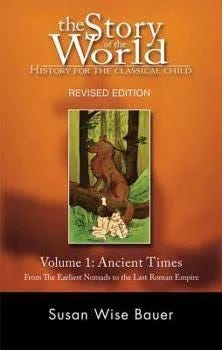
Susan Wise Bauer’s The Story of the World (4 volumes, Peace Hill Press) remains the backbone of classical history education, used in thousands of homeschool families and classical schools. It covers Ancient Times through the Modern Age in narrative form, the way history used to be taught, as story.

The D’Aulaires’ illustrated mythology and biography books, Greek Myths, Norse Myths, Abraham Lincoln, Benjamin Franklin, are still in print and as beautiful as ever. These are the books grandparents remember. If you have never seen the D’Aulaires’ Abraham Lincoln, find a copy. It is one of the great illustrated books of the 20th century.
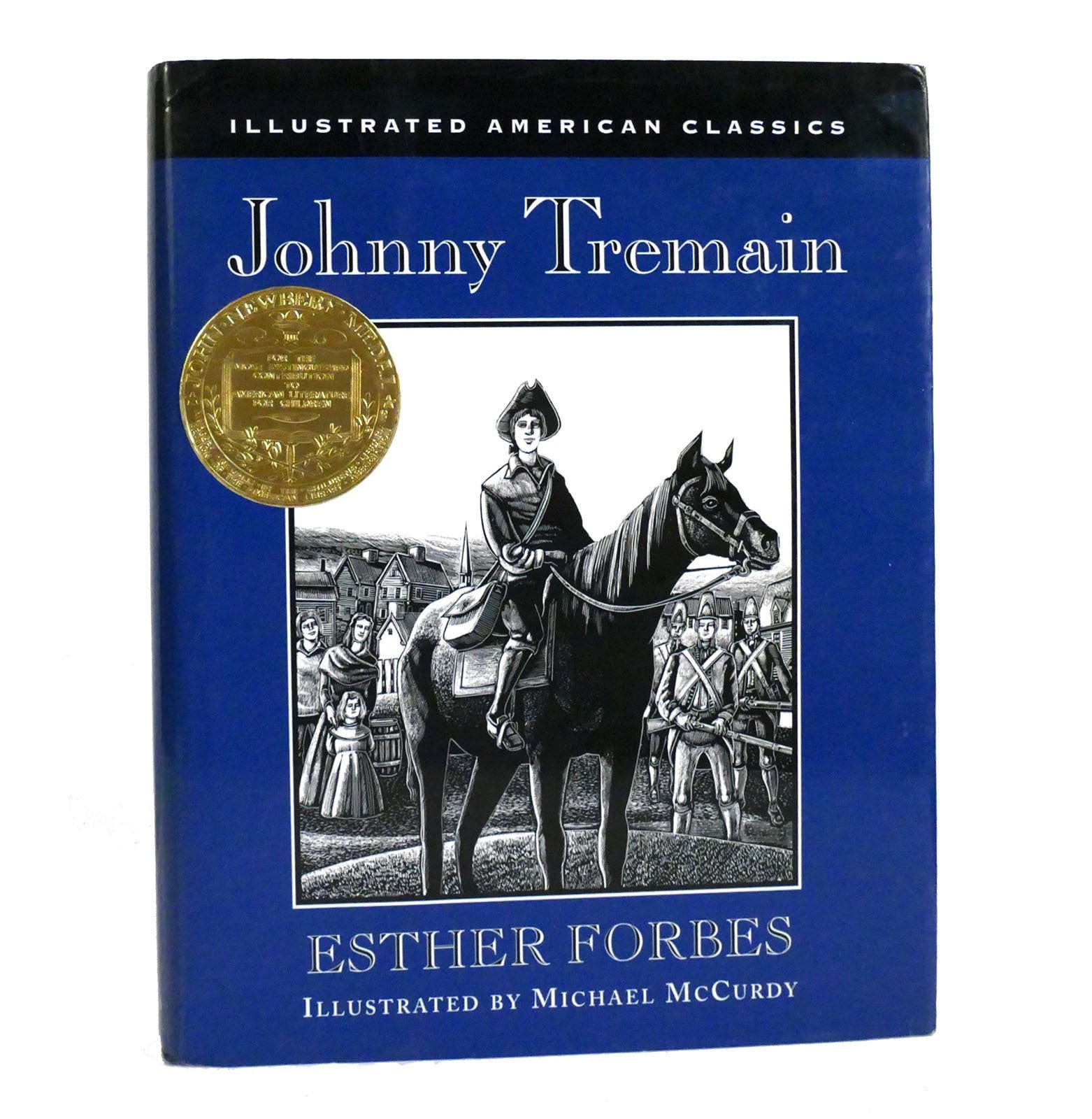
Johnny Tremain, Esther Forbes’s Newbery-winning novel of a Boston apprentice drawn into the Revolution, is still available, though it has been replaced in many public school curricula by books with more contemporary ideological framing.
Across Five Aprils, The Boys’ War, Carry On Mr. Bowditch, Minn of the Mississippi: the canon of narrative, character-driven, award-winning American history books for middle grades is mostly still in print. You just have to know to look for it, because you will not find it prominently displayed or recommended by mainstream education publishers.
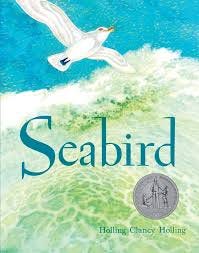
G.A. Henty’s 80+ historical novels, covering every major era of world history from Ancient Rome to the Boer War, are available from multiple independent presses. Holling C. Holling’s illustrated geography-history series, Paddle-to-the-Sea and Seabird, is in print and still extraordinary.
Genevieve Foster’s “horizontal history” books, which show what was happening simultaneously around the world during the lifetimes of figures like Augustus Caesar and George Washington, have been reprinted in full by Beautiful Feet Books. This series almost disappeared entirely. One small independent publisher rescued it.
The curriculum programs are in better shape than the trade books. Notgrass History, Memoria Press, Veritas Press, Classical Conversations, and Peace Hill Press are all actively producing traditional history education for home and classroom use.
Hillsdale College’s 1776 Curriculum is a 2,400-page K-12 American history and civics program built on founding documents and primary sources, and it is completely free to any school, homeschool, or parent who wants it.
WHAT’S GONE AND WHAT THAT MEANS
The Landmark Books are the most dramatic case but not the only one.
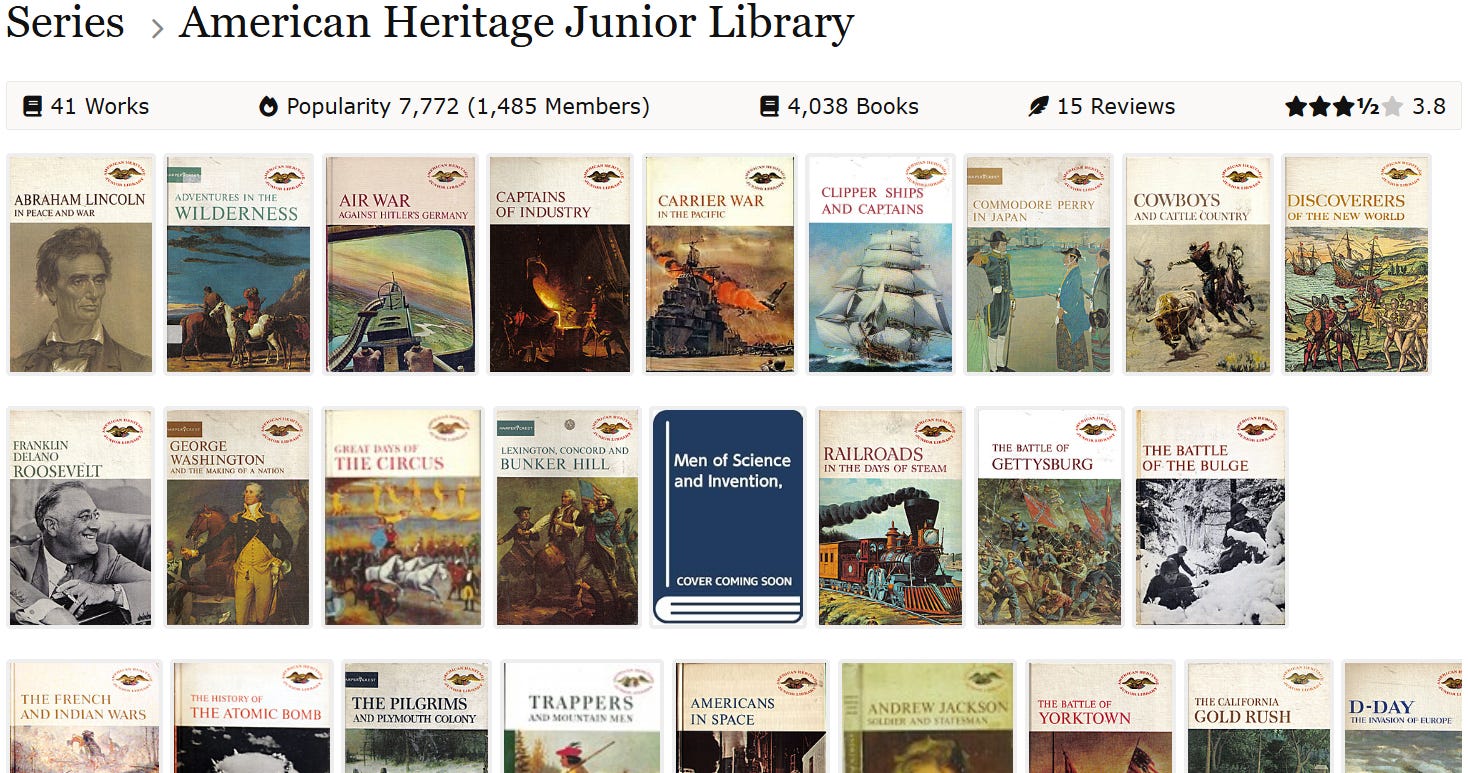
The American Heritage Junior Library, a lavishly illustrated multi-volume American history series from the 1960s, has no modern reprint program. Genevieve Foster’s books survived only because Beautiful Feet Books made it their mission. Without that one independent publisher, they would be lost too. The original Our Island Story, H.E. Marshall’s 1905 narrative history of Britain, exists primarily as a free Project Gutenberg text. The mid-20th century genre of civically spirited American history textbooks, the ones that organized American history around democratic ideals and national founding rather than systemic critique, has been almost entirely replaced in mainstream publishing by Pearson and McGraw-Hill titles built around progressive social frameworks.
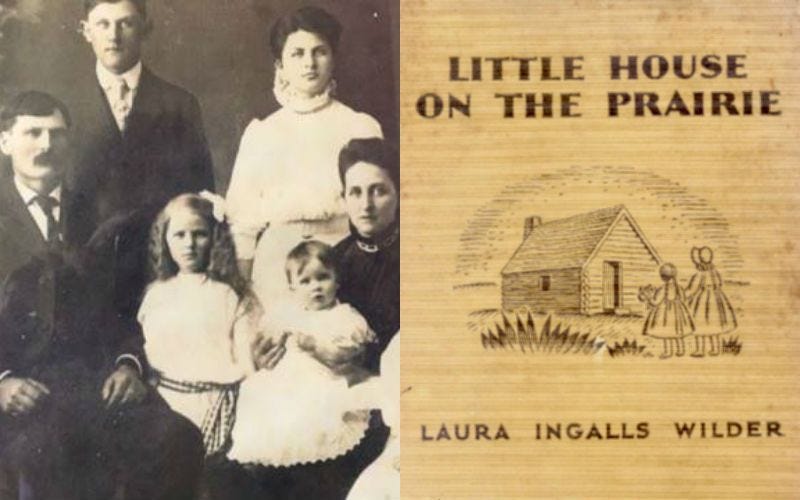
The Little House series is still in print and still a bestseller. But the American Library Association removed Laura Ingalls Wilder’s name from their children’s literature award in 2018, and the books have been quietly dropped from required reading in many school districts. Johnny Tremain and Sign of the Beaver are in the same position: technically available, functionally disappearing from classrooms.
None of this happened by proclamation. There was no list, no announcement. Books simply went out of print, or were not assigned, or were replaced by titles that told a different story about what America is and what children should feel about it.
WHY THIS MATTERS RIGHT NOW
The argument for teaching history through the oppressor/victim framework is that it tells a more complete truth. But a framework is not the same as the truth. It is a lens, and like any lens, it selects what to show and what to hide.
The Landmark Books showed American history as a story of ideas, courage, invention, conflict, and consequence. A story children were trusted to inhabit and judge for themselves. That is not propaganda. It is what history education used to mean.
The good news is that the resources to do it right still exist. The homeschool and classical education communities have preserved more than most people realize. The database we built is a map to what remains and a record of what has been lost, so we know what needs to come back.
If you know of titles we missed, please comment below. This is a living document.
WHERE TO FIND OUT-OF-PRINT BOOKS
AbeBooks — best for specific titles ThriftBooks — good prices, reliable condition ratings eBay — best for hunting full Landmark sets Project Gutenberg — free digital editions of pre-1924 titles including Our Island Story and This Country of Ours The Baldwin Project — free archive of classic 19th and early 20th century history readers for children Sterling Point Books — has reprinted about 10 Landmark titles in paperback
Restore Childhood is a 501(c)(3) nonprofit dedicated to protecting children’s education, health, and parental rights. If this resource was useful to you, please share it and consider supporting our work at restorechildhood.com/donate.
Excellent piece, Natalya!! Our family loved the Landmark books and we have shared them between my brother and I so our kids can be raised reading them. They are absolutely stellar.
Another thing that is gone is the "Classics Illustrated" series of comic books. I started reading those as soon as I learned to read. And they introduced me to all kinds of great authors--Dickens, Walter Scott, Jack London, G. A. Henty, and more. But I didn't stop with those comic books, I went on to read the original books they were based on. When I was in elementary school in the late 1950s, we were living in a rural area, about 50 miles east of Cincinnati, OH. There was a public library at the county seat, about 15 miles away; and about every six weeks a bookmobile from the state library in Columbus came to our little crossroads Hamlet. But through those sources, I was able to find and read many of the classics.