


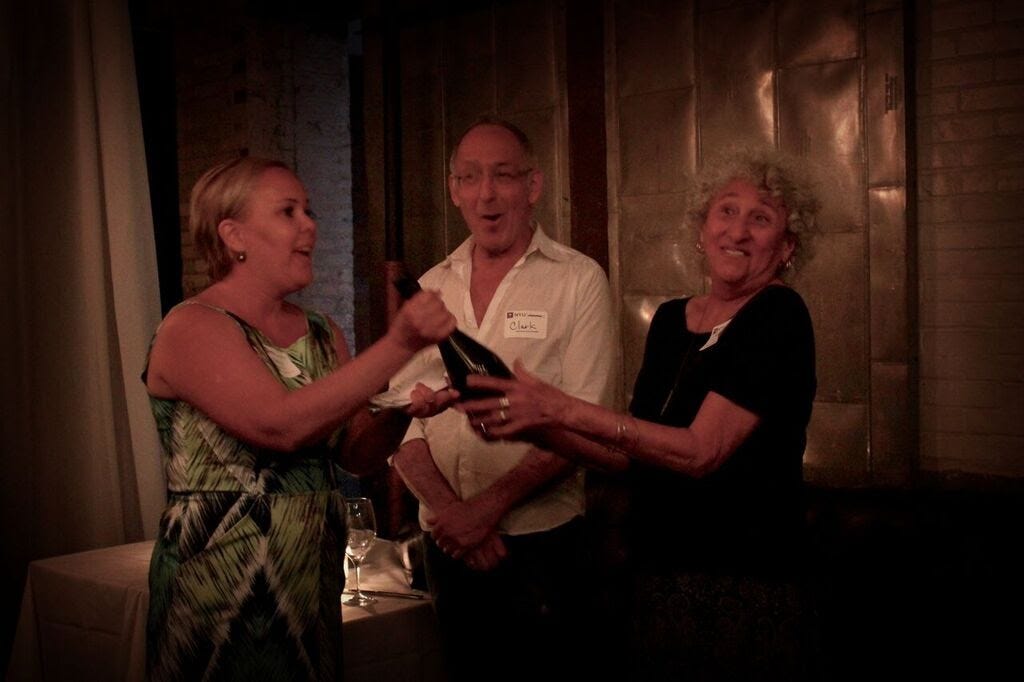
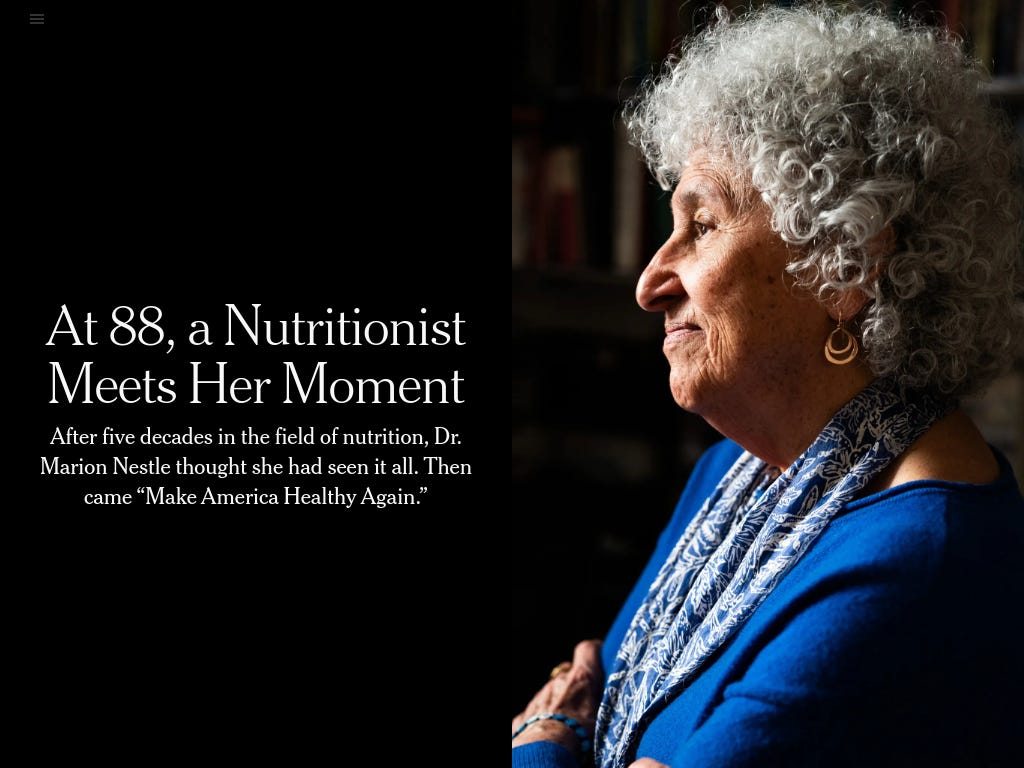
From 2003 through 2007 I was a graduate student in the Department of Nutrition, Food Studies and Public Health at NYU. Marion Nestle founded that department in 1996. When I got there it was seven years old and the first of its kind in the country. She was a big reason I applied.
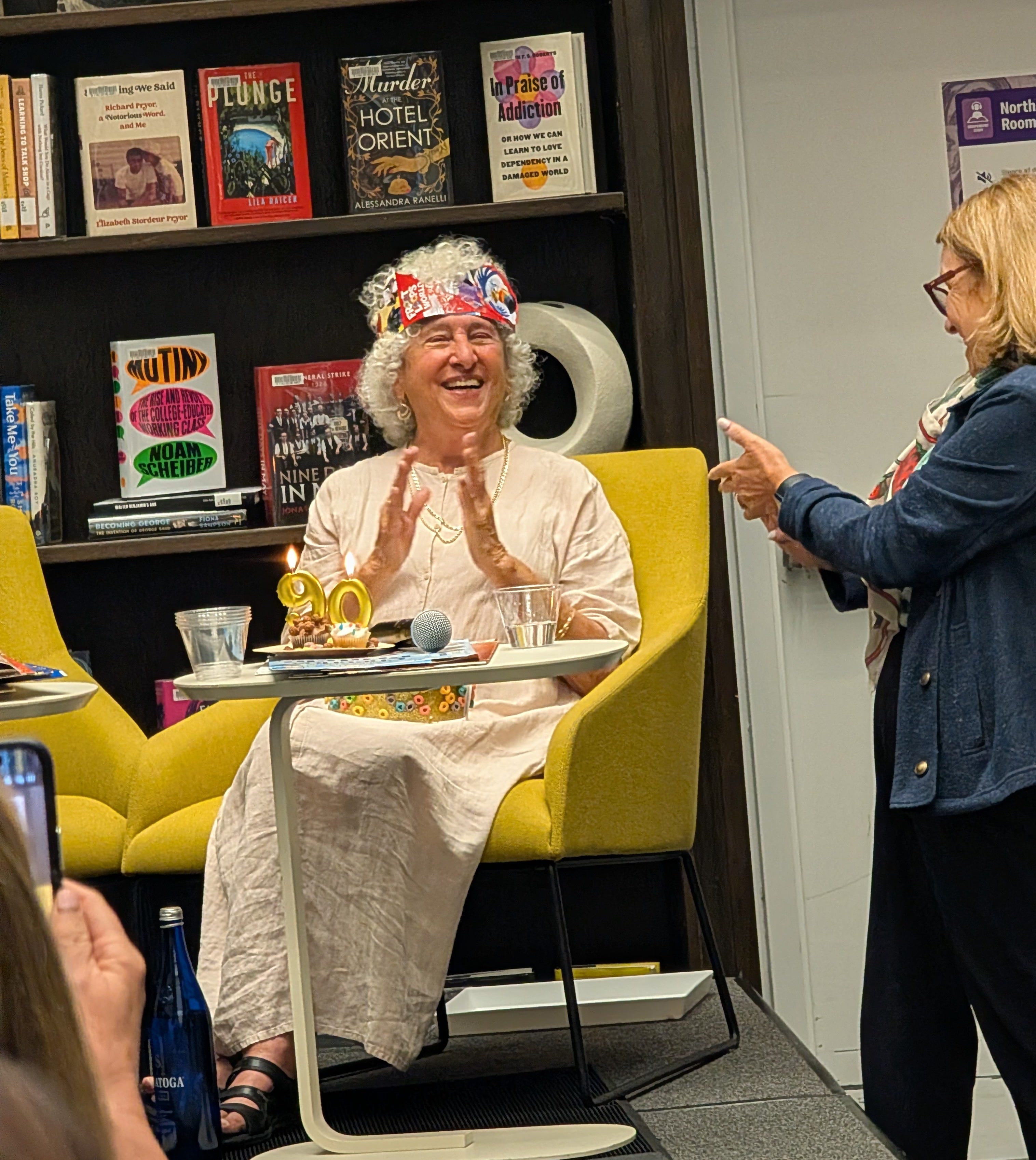
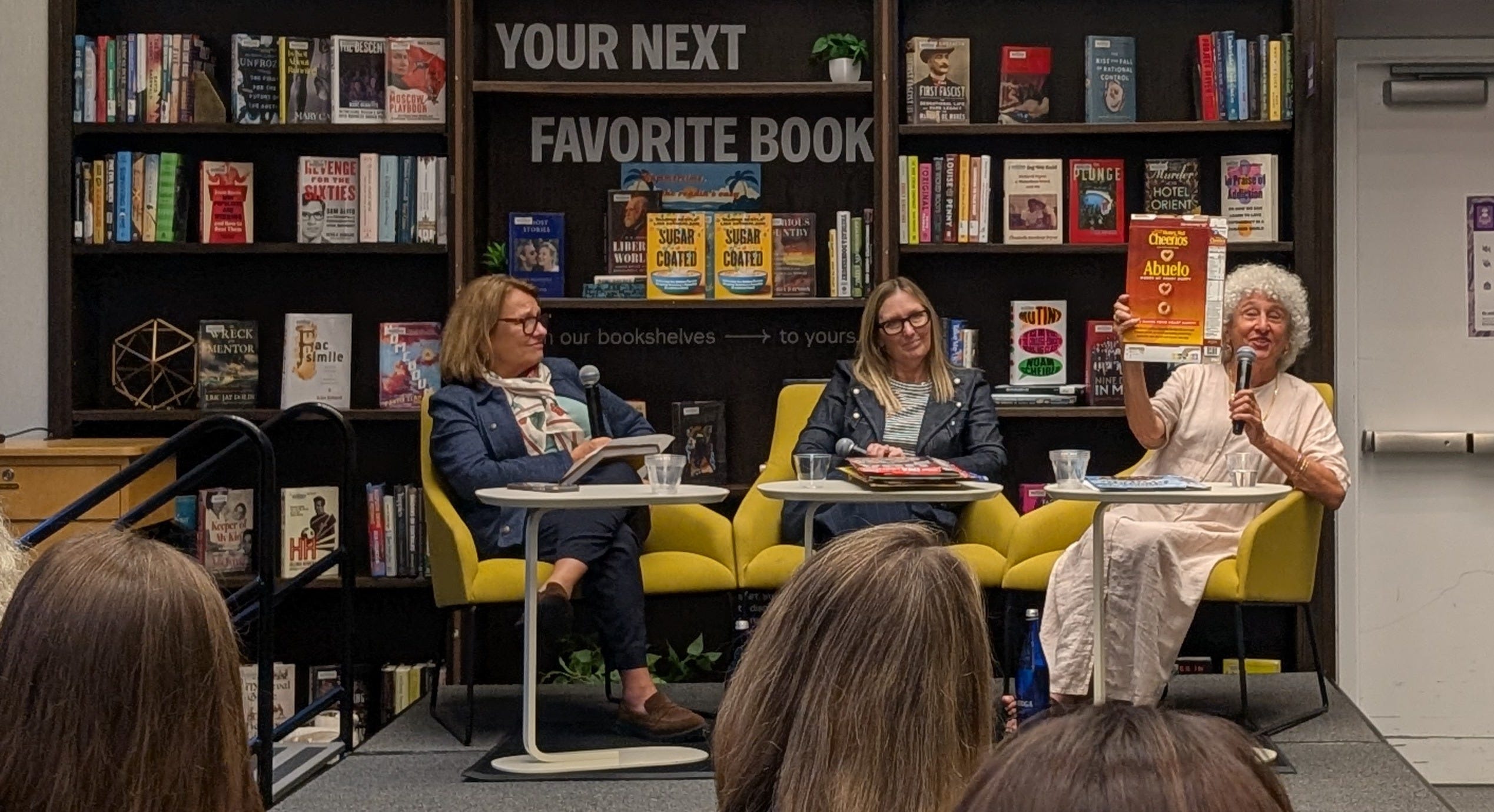
On Tuesday night I stood in a crowded room at NYU’s Bobst Library while probably over a hundred people sang “Happy Birthday.” Marion, who has written 18 books, is now 90 years old and the Food Studies department is celebrating its 30th birthday this year.
Wow!
Marion has been one of the most influential people in my life.
She taught me to look at marketing claims and at who benefits from us believing these claims. My mother taught me much the same, and between the two of them I have never been able to read a package, a school newsletter, or a doctor’s handout the same way again.
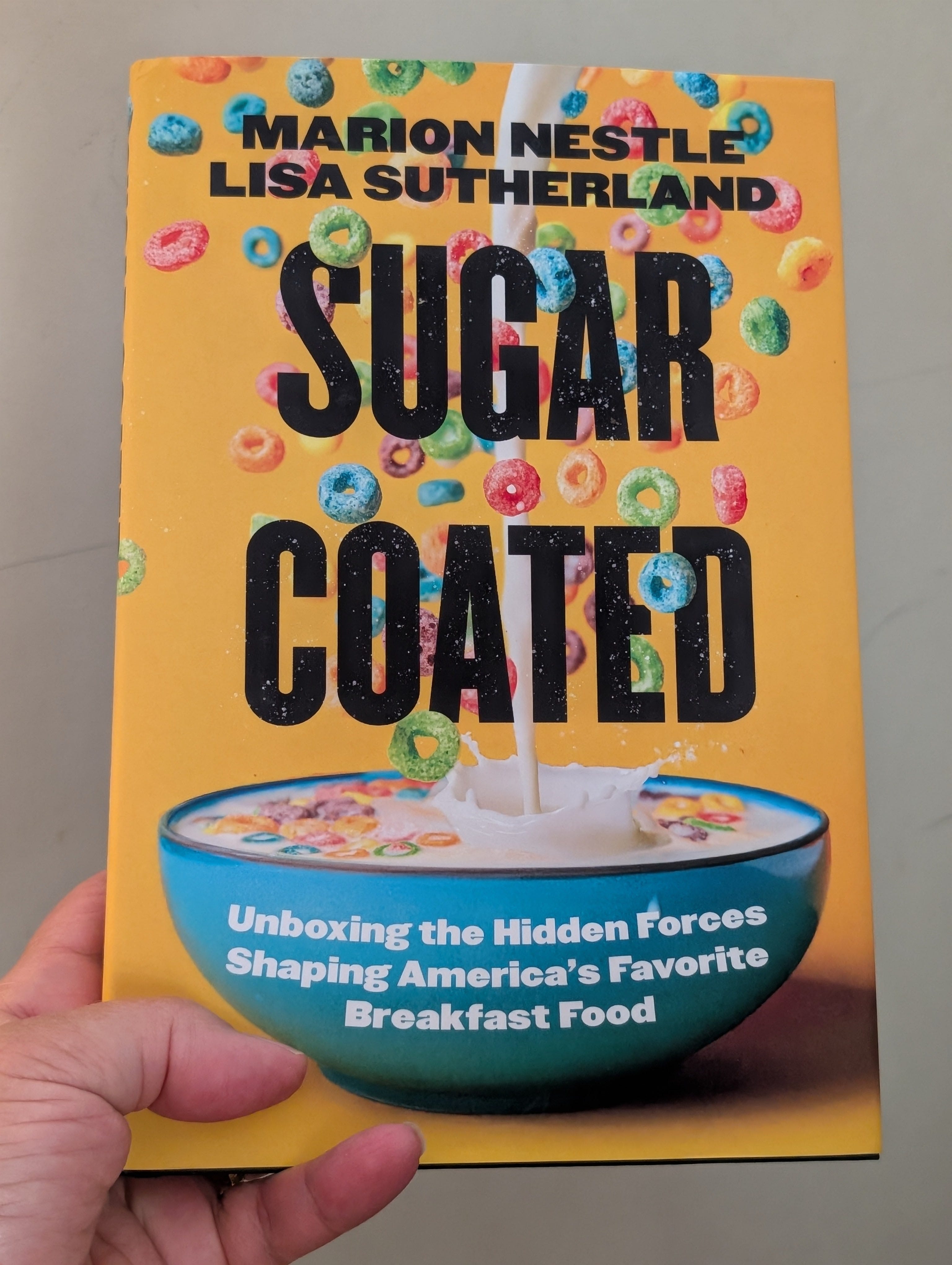
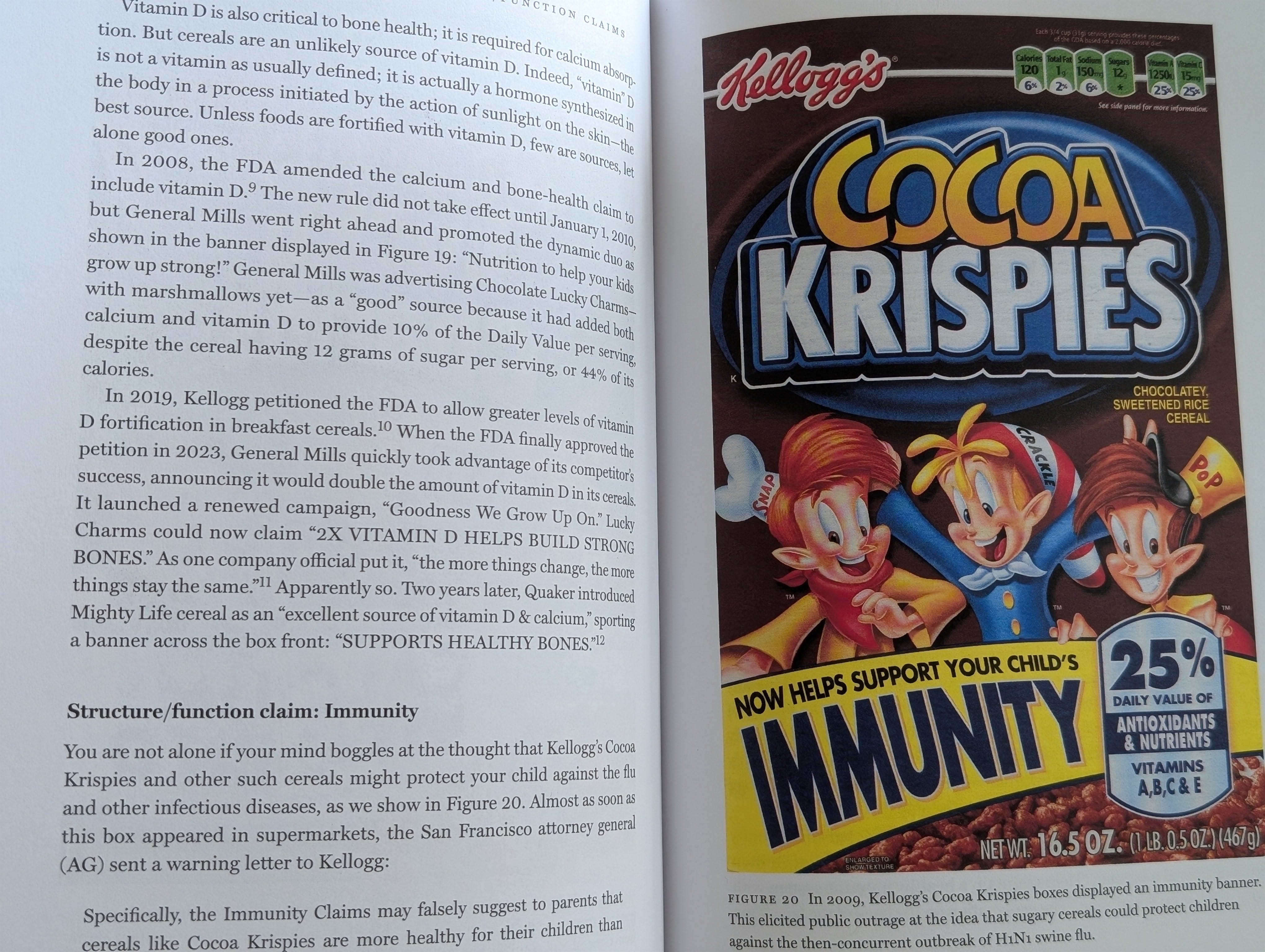
Marion’s new book (co-written with Lisa Sutherland) Sugar Coated, which was published yesterday, is all about the fronts of cereal boxes. But, of course, it is not just about cereal. It’s about the difference between what the front of a package promises and what is actually inside.
It also got me thinking just how much of what we buy for our children (and ourselves) we buy after falling for the front images and promises, without verifying if the ingredients are supportive or contradictory.
Dr. Marion Nestle on Childhood Obesity
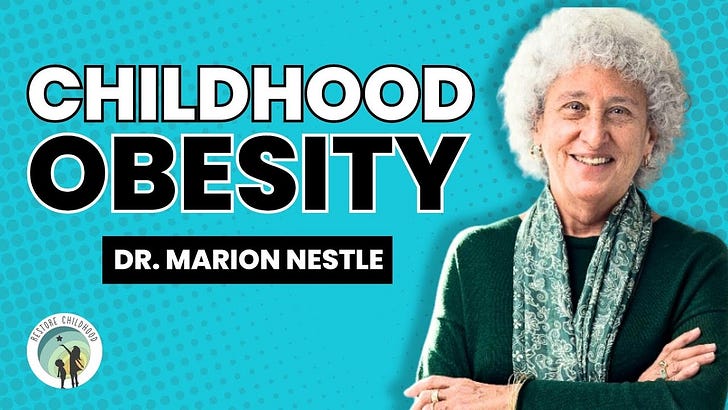
*Watch* my interview with NYU Department of Food Studies founder Dr. Marion Nestle talking about her memoir "Slow Cooked," An Unexpected Life in Food Politics. She explains how children's weight has grown over the years, the risks that come with obesity drugs like Ozempic, and touches on the chilling of speech on college campuses. At 86, Dr. Nestle is a…
The two boxes behind her
Three years ago I interviewed Marion about childhood obesity. If you watch our conversation, you will notice, as I just did that there are two cereal boxes sitting on the shelf behind her head.
I didn’t think to ask about those boxes at the time. I thought they were props, or a joke.
Turns out, they were research. She has collected cereal boxes since the Reagan administration, and she was already deep into the book that came out this week.
Sugar Coated
Sugar Coated: Unboxing the Hidden Forces Shaping America’s Favorite Breakfast Food was written with Lisa Sutherland, who is a former nutrition vice president at the Kellogg company. Lisa now serves as interim president of Jacksonville University.
The pairing is certainly unusual. Marion is one of the most persistent critics of the food industry in the world. Turns out the two met years ago. In 2010 Marion talked her way into Kellogg’s headquarters in Battle Creek, Michigan, to see the archives.
The lawyers said no. The nutrition staff felt sorry for her and handed her something better: full color copies of three cereals, every box design, from the year each one launched to the day she walked in.
All-Bran from 1919.
Rice Krispies from 1928.
Froot Loops from 1963.


They spread them on a table. Someone said, this is the year the FDA passed that rule, this is the year we got sued. And they looked at each other and understood they were holding a history of American food policy printed on the sides of boxes.
A billboard you carry home
Marion’s co-author Lisa Sutherland calls the cereal box a “billboard,” — that may be the most useful way of looking at marketing, or front-of-box-claims, for everything.
Cereal companies redesign these boxes constantly, sometimes as often as a dozen times a year. Nothing else in the grocery store is that big, that bold, or that responsive. When the science changes, the front of the box changes. When a company loses a lawsuit, the front of the box changes. When Washington moves, the front of the box moves with it, usually in the same week.
Here is a great illustration of this…
From 1986 to 1988 Nestle served as senior nutrition policy advisor at the Department of Health and Human Services and managing editor of the 1988 Surgeon General’s Report on Nutrition and Health. The advice was not radical. Less saturated fat, less salt, less sugar, more fiber, more fruits and vegetables.
Within months of publication, General Mills put out a box announcing that the cereal inside met all seven of the Surgeon General’s recommendations.
That box became the first in Marion’s cereal collection.
General Mills turned a government health report meant to help families eat better into ad copy for a boxed grain product, in under a year.
Once you see it you see the way health and wellness claims are used to sell stuff, you see it everywhere.
It was never only cereal
Nearly every product sold to children has a “front of the box”.
A curriculum comes with a glossy cover and a promise of rigor and outcomes. Somebody gets paid to write it, lobbies to keep it adopted, and the district that buys it rarely reads past the front. A social and emotional learning program comes with a research-backed sticker on it. Ask who did the research and who sells the training. A school markets itself with a photo of children on a lawn. A pediatrician hands you a printed guideline manufactured by a pharmaceutical company.
Marion said something in our 2023 interview I have not been able to shake. We were talking about the American Academy of Pediatrics guidance on childhood obesity, which opened the door to surgery and to drugs a child would take for life. She called it a downstream solution. Downstream is where you treat the sick child in front of you, one at a time, after the damage is done. Upstream is where you go to find out why so many children keep getting sick in the first place.
We run an enormous, expensive, well-meaning operation downstream.
Almost nobody works upstream, because there is no product to sell there.
Maybe the drug companies would like millions of children on a lifetime prescription. No one else wants this.
The institution that sell to us have a budgets, lobbyists, growth targets, and, most importantly, stories. They print the story large and the ingredients small, on the side. In light, fine print.
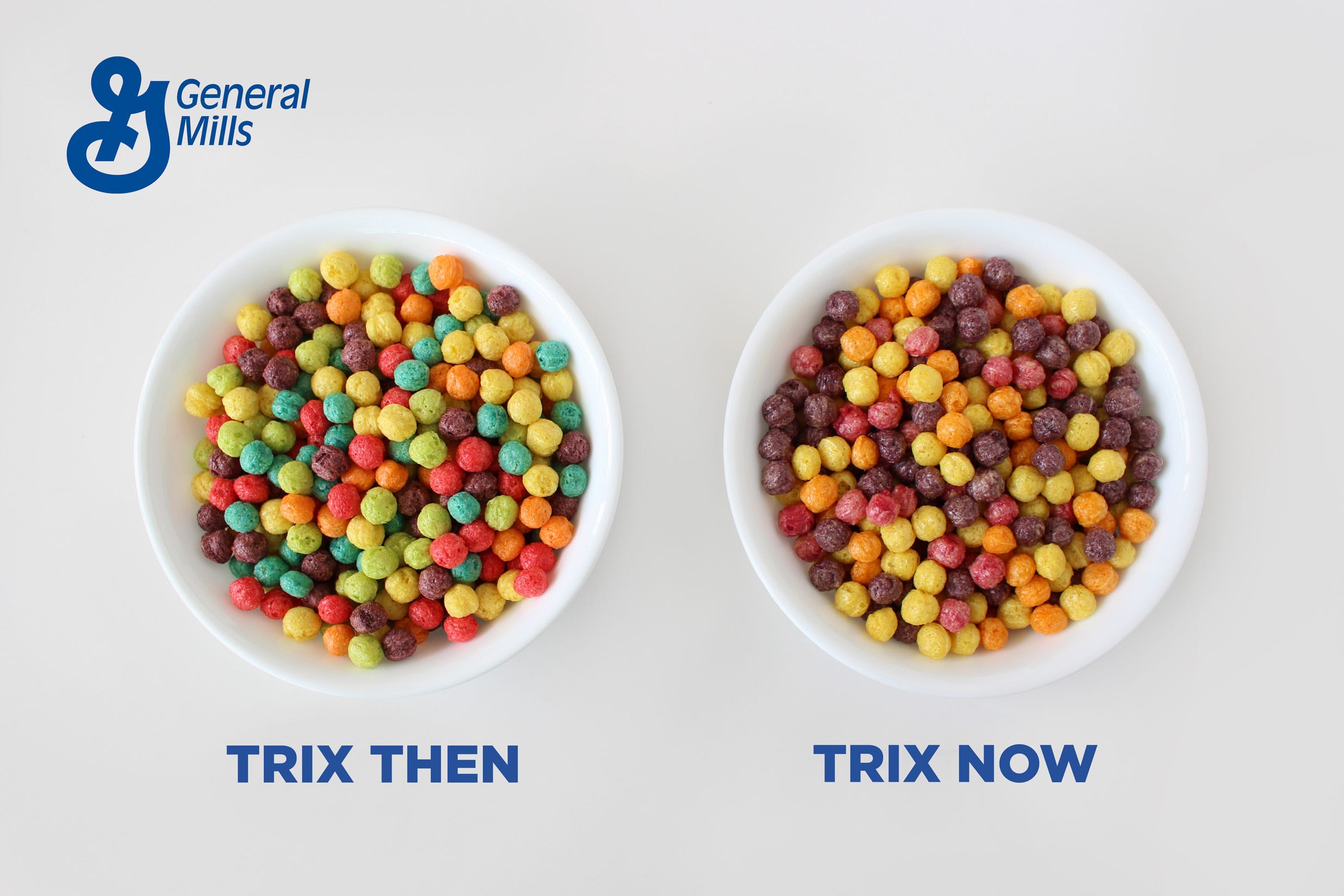
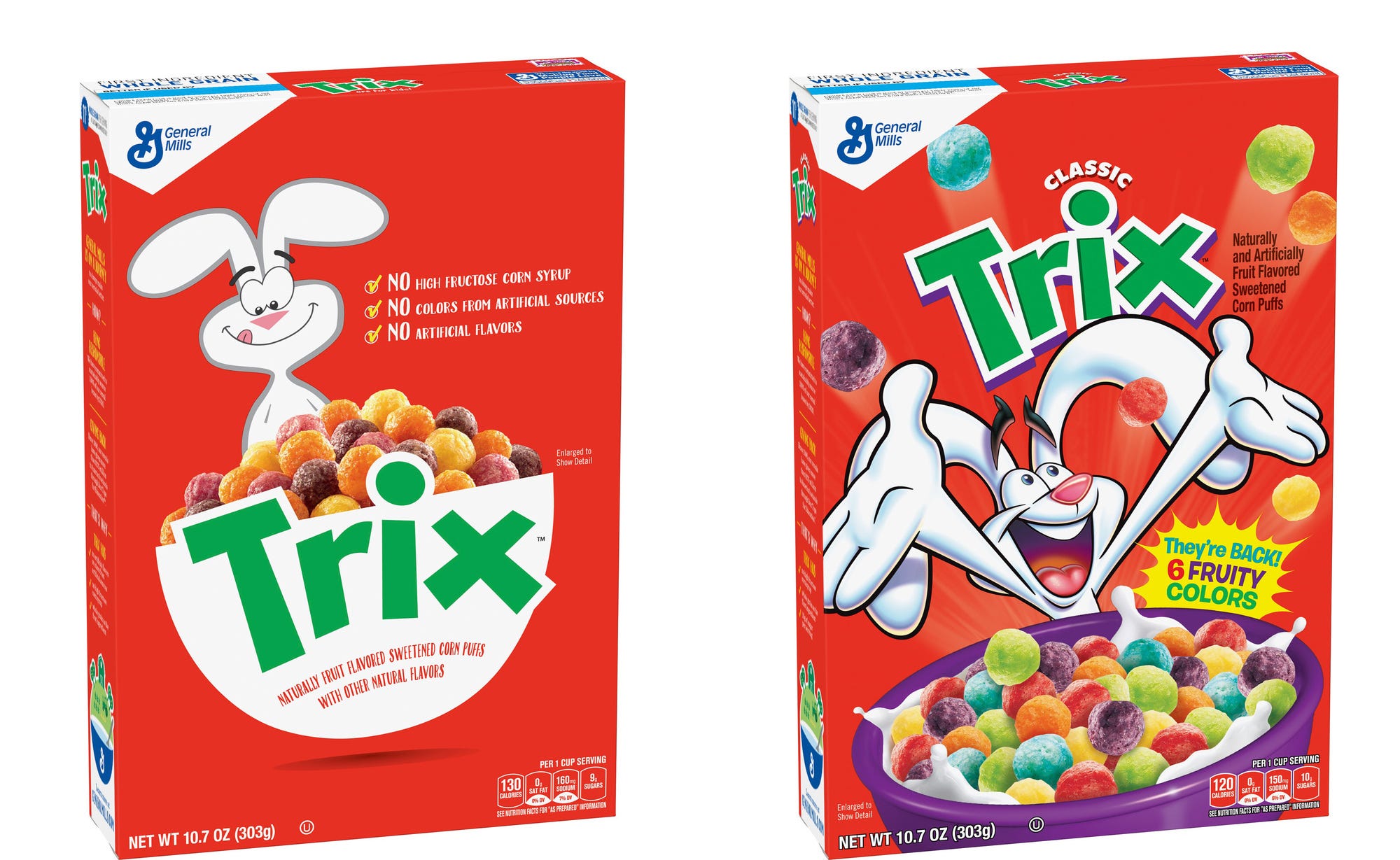
Trix Cereal, Then & Now
In April 2025, Health Secretary Robert F. Kennedy Jr. and the FDA announced a plan to strip the petroleum-based synthetic dyes out of the American food supply, targeting Red 40, Yellow 5, Yellow 6, Blue 1, Blue 2 and Green 3. Industry had spent decades explaining why this was impossible, even though these colorings were banned in the same products in Europe.
It took about sixteen months, but by late August, General Mills confirmed it had removed artificial colors from its entire U.S. cereal lineup, Trix and Lucky Charms included, after finishing its K-12 school foods in March. WK Kellogg, which makes Froot Loops and Apple Jacks, pulled its own deadline forward to the end of this year, roughly a year ahead of schedule.
American cereal ingredient lists now look much closer to the European versions our companies have quietly produced all along. European children never ate those dyes. American children ate them for decades, and science was never the reason.
Marion went to three supermarkets last week hunting for one last box of Trix made with the old dyes and found only one. At her own book party it was set beside the new vegetable-colored box, with poured bowls of each, letting a room full of food studies and nutrition people see and taste the difference.
What I want you to do with this
Turn that box around.
Turn that curriculum around.
Turn that therapy program around.
Turn the school brochure and the clinical guidelines around.
Read the small, gray print on the side, find out who profits if you believe the front, and then decide.
This is an important lesson in critical thinking- and best of all, you can give it to your own children this week, in a grocery aisle, for free.
You can buy Sugar Coated here.
Happy birthday, Marion!
You just read this for free. Over 7,000 subscribers will do the same, and we want that number to double. If you’re in a position to be one of them, that’s the single most useful thing you can do here. Please also share this post with others, every share matters!
Paid subscriptions fund the writing. Tax-deductible donations to Restore Childhood fund the films, the parent guides, and the books.
"Almost nobody works upstream, because there is no product to sell there." 100%! What a great article and tribute to your mentor. Once you read the labels, it is really hard to stop!
Great article. This is in behavioral health too, just look at all the "front of box" claims on therapist websites. It's nauseating for those of us in the field who still have integrity.