


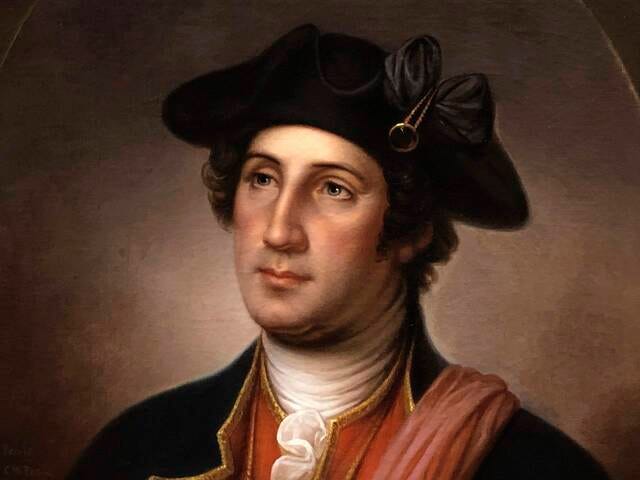
On July 3, the night before America’s 250th birthday, I saw Young Washington, the day it opened theatrically nationwide. I watched it in Manhattan, in one of the most progressive corners of the country. The theater was about 75% full.
Angel Studios released the film in more than 2,700 theaters- it earned $20.8 million on opening weekend, its best live-action opening ever. A sequel, 1776, is already in the works.
If you build it, they will come.
The studio built the release around America’s 250th on purpose, and people came to see it.
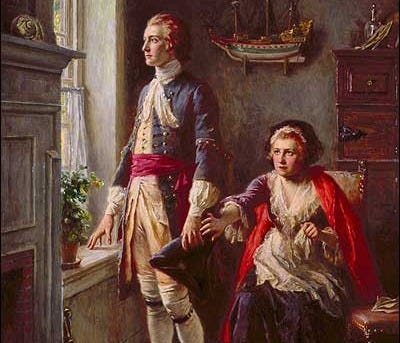
The film opens with George Washington as a boy who has just lost his father. He loves to learn, but the loss ends his schooling. He has to help his mother run the family farm and look after a younger brother, and he hates giving up his education. Then his older half-brother Lawrence steps in and teaches him. Lawrence studied in England and gives George real books, chess, and a picture of the wider world. George soaks it all up and puts it to work.
![Lawrence Washington, by unknown artist, c. 1743. Purchase, 1936 [W-126]](https://substackcdn.com/image/fetch/$s_!nlbN!,f_auto,q_auto:good,fl_progressive:steep/https%3A%2F%2Fsubstack-post-media.s3.amazonaws.com%2Fpublic%2Fimages%2Fde909981-cced-4fbf-a6b9-f274749d03f8_1501x1800.jpeg "Lawrence Washington, by unknown artist, c. 1743. Purchase, 1936 [W-126]")
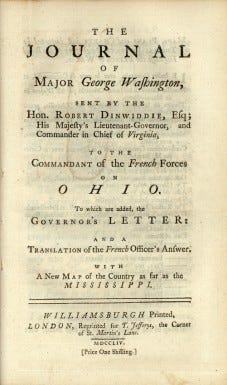
What makes Washington worth watching goes past his size and his nerve. He wants to earn his place. When he asks for a British commission, the British turn him down for being a colonial, so Virginia’s lieutenant governor Robert Dinwiddie commissions him into the Virginia militia instead. He fights for the Crown against the French on the Ohio frontier.
The film shows Washington’s failures head on. At Fort Necessity in 1754, Washington built a fort in a low, flooded meadow with high ground all around it, and the French shot down on his men from the trees. He had to surrender, the only time he ever did in his military life, and he grieved the men he lost. Afterward, Dinwiddie broke the regiment into smaller companies and offered Washington a demotion. Washington refused the lower rank and the lesser pay that colonial officers got next to British regulars, and he quit rather than take unequal treatment.
He never chased titles. He said again and again that he fought for the men beside him and the land under his feet.
Then he watched weaker men march out to lead, and he could not stay home.
According to American Heritage, “Upon at least five occasions when in great danger from gunfire George Washington remained unscathed. His hat was shot off his head; his clothes were torn; horses were killed beneath him, but the hero was never so much as scratched by a bullet. For this immunity he thanked ‘Providence.'”
He signed up again, this time as an aide to British General Edward Braddock, and rode into the disaster at the Monongahela in July 1755. History calls it a brutal British defeat, and the film tells it that way. Braddock died. Washington took 2 horses shot out from under him and 4 bullet holes through his coat, and he walked away without a scratch. He pulled the survivors together and got them out alive. He later wrote that Providence alone protected him. That escape, in the middle of a loss, is where the future leader of a revolution starts to show.
In the film, Washington’s mother tells him, “Failure is a tutor sent by God. If you don’t learn from it, you fail twice. If you do learn from it, you’ve earned wisdom.” That speaks to our kids and to the parents, too.
Mistakes teach us. What we do with them decides their ultimate meaning.
This is a merit story. Washington rose because he worked, because he learned, and because he would not let a rigged system set his worth for him. He showed humility without weakness and ambition without arrogance. He showed true grit.
That is upward mobility in its best American form.
In the film, Washington’s mother tells him, “Failure is a tutor sent by God. If you don’t learn from it, you fail twice. If you do learn from it, you’ve earned wisdom.”
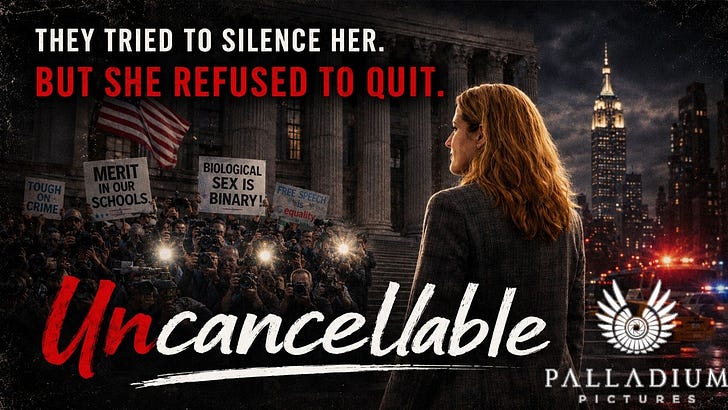
This is the work we do at Restore Childhood. We tell hero stories because our kids grow up in a culture that teaches them to feel guilt about their own country and contempt for the people who built it. We fill that vacuum with real Americans worth looking up to. I made 15 DAYS about ordinary parents and doctors who told the truth about the pandemic school closures when speaking cost them. I made Uncancellable about Maud Maron, a New York City public school mom who kept talking after every institution she belonged to tried to silence her. Young Washington keeps our films great company, it is also about an ordinary American who refused to back down from his conscience and internal drive.
The only way to crowd out the bad is to give our kids something good to reach for. Here is a real American hero we can be proud of. There is no guilt in raising a proud American, and no one models that better than George Washington. Give your children heroes, and be those heroes yourself.
Find showtimes and get tickets here. Take your kids, talk about it on the ride home, and again at the dinner table.
Tell me what you thought in the comments!
Love it! Thanks for sharing!
We took our family on the 4th and absolutely loved it. The theater was packed and at the end everyone cheered. This is the kind of hero I want my three boys to look up to and remember how blessed we are to be Americans.