


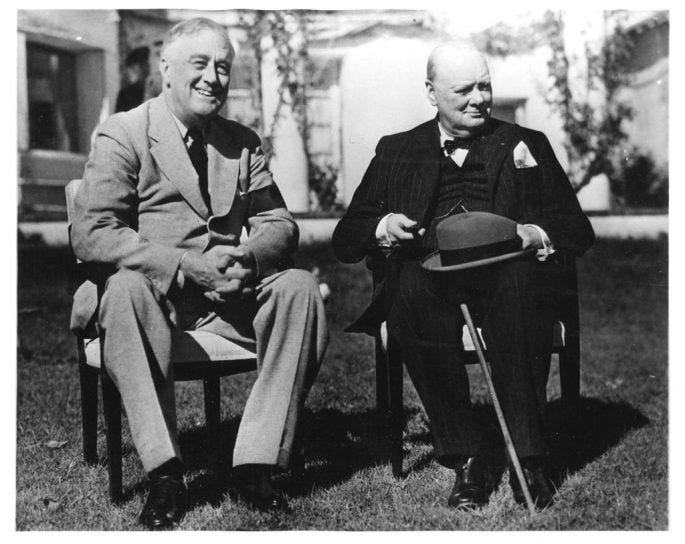
Ask your child tonight. Not about dates. Not about battles. Just: who was Winston Churchill, why did he matter, and what would have happened if he hadn’t?
Then ask him: what is a republic, and what does it require of the people who live in one?
Bright kids. Engaged kids. Kids in good schools in good neighborhoods. And a striking number of them have no framework for what they are watching on their phones. No story to put it in. No past to measure it against. No instinct that this moment rhymes with any moment they have ever been taught about.
This is what I wrote about in The Numerator Generation, the way we have raised children who can absorb alarming information but cannot contextualize it. Who know that something feels bad but cannot ask the most clarifying question in history: compared to what? Compared to when? What happened the last time the world faced something like this, and what did the people who got it right do differently from the people who didn’t?
The Numerator Generation

We’ve created a generation—parents and children alike—paralyzed by numerators without denominators. A single alarming number, stripped of all context, deployed to trigger fear and compliance. And it’s working, because we’ve lost the ability to ask the most basic question: compared to what?
We have stripped the denominator from history class most of all. And we are now watching what that produces.
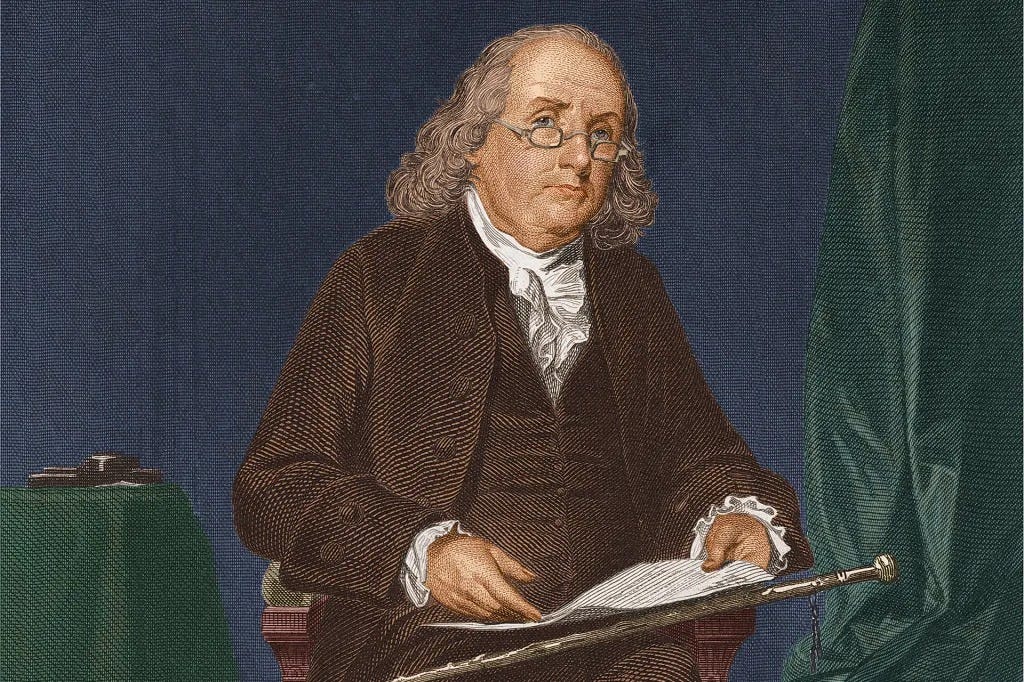
“A republic, if you can keep it.”
— Benjamin Franklin, walking out of the Constitutional Convention, 1787
Benjamin Franklin said it because he already knew what we keep having to relearn: a republic is not a passive inheritance. It is a living agreement: one that requires an informed citizenry, people who understand what came before them, what was sacrificed to get here, and what happens when free people mistake comfort for safety and go quiet.
Here is the history our children are not being taught:
America waited.
While a genocidal regime consolidated power in Europe.
While the warning signs accumulated into atrocities. FDR hesitated, miscalculated, and deferred while the cost compounded with every passing month.
By the time America entered the war, it was already catastrophic. By the time it ended, atomic bombs had been dropped on Japan, decisions made in the shadow of a conflict that had already consumed more lives than any in human history. All of it might have been different. All of it might have been shorter. If the world’s leading democracy had led when leading was still relatively cheap.
Churchill stood nearly alone.
He was mocked, called a warmonger, written off as an alarmist out of step with his times. He saved Western civilization anyway. That is the actual record, the documented history of what happens when one person refuses to normalize what is happening in front of him, and a country eventually finds the courage to follow.
And yet a significant number of Americans under 40 have been so thoroughly emptied of this context that they are now susceptible to revisionist narratives that cast Churchill as the problem. That treat American intervention as the original sin rather than the delayed but necessary act that preserved the free world.
This is what acontextual education produces. Not nuance. Vulnerability. To demagogues. To propaganda.
To the oldest and most dangerous lies, which never announce themselves as lies, they always arrive dressed as common sense, as pragmatism, as “why should we care about any of this?”
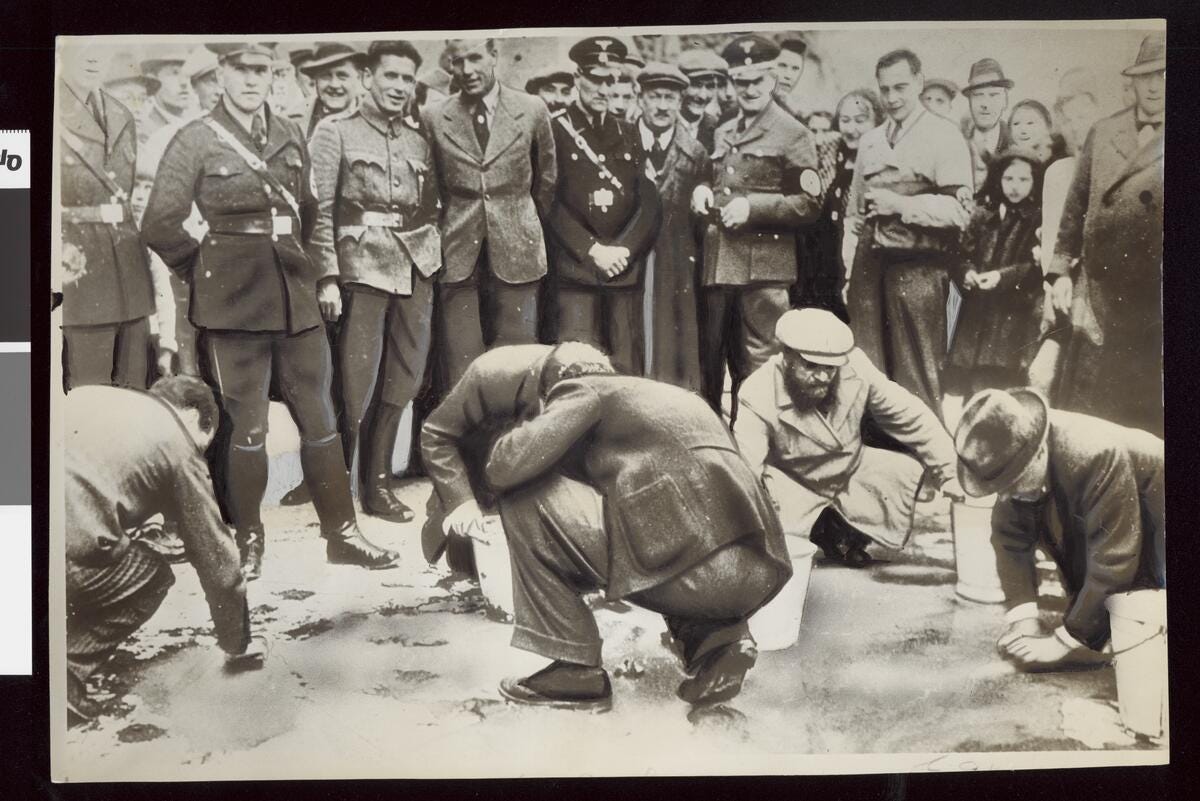
Show this to your child. Then ask them: what do you think the people watching told themselves about why this had nothing to do with them?
Sit with whatever they say. Don’t correct it immediately. Let them feel the discomfort of not having an answer. That discomfort , that pause, is the beginning of historical literacy. That is what good education used to reliably produce. That is what has been systematically removed.
And it has been removed, I want to be clear, not by accident. History without narrative is history without stakes. History without stakes produces citizens without obligations. Citizens without obligations are much easier to manage.
This is the through-line of everything we do at Restore Childhood. Whether we are talking about school closures, curriculum, or the erasure of parental authority, the common thread is always the same: institutions that were supposed to serve children have been quietly repurposed to produce a certain kind of adult.
Compliant. Decontextualized. Incapable of asking compared to what?
The antidote is not a different curriculum, though that matters. The antidote is you, at the kitchen table, refusing to let the record be erased.
Three things to do this week:
🎖️ Find a veteran and bring your child to sit with them. WWII veterans are now in their late 90s. The window is almost closed. Korea and Vietnam veterans are not far behind. These are living primary sources — the most powerful history lesson available, and it costs nothing. The Library of Congress Veterans History Project can help you find, record, and preserve their stories.
📖 Read aloud together — not as homework, as literature:
FDR’s Day of Infamy address — full text and handwritten manuscript
The Declaration of Independence — read it as a document people knew they might hang for writing
🗺️ Put a map on the wall and use it. When something happens in the world, find it on the map together before you discuss it. Geography is context. Context is the denominator. And the denominator is what we have stopped teaching.
Franklin’s question was never rhetorical. It was a warning dressed as a question, issued by a man who had just watched a group of imperfect, brilliant, terrified people attempt something that had never been done before, and succeed. He knew what it would cost to keep it. He knew most generations would be tempted to assume it kept itself.
The republic is kept, or lost, one generation at a time.
One kitchen table at a time.
One child who knows the answer, or doesn’t, at a time.
Which generation will ours be?