


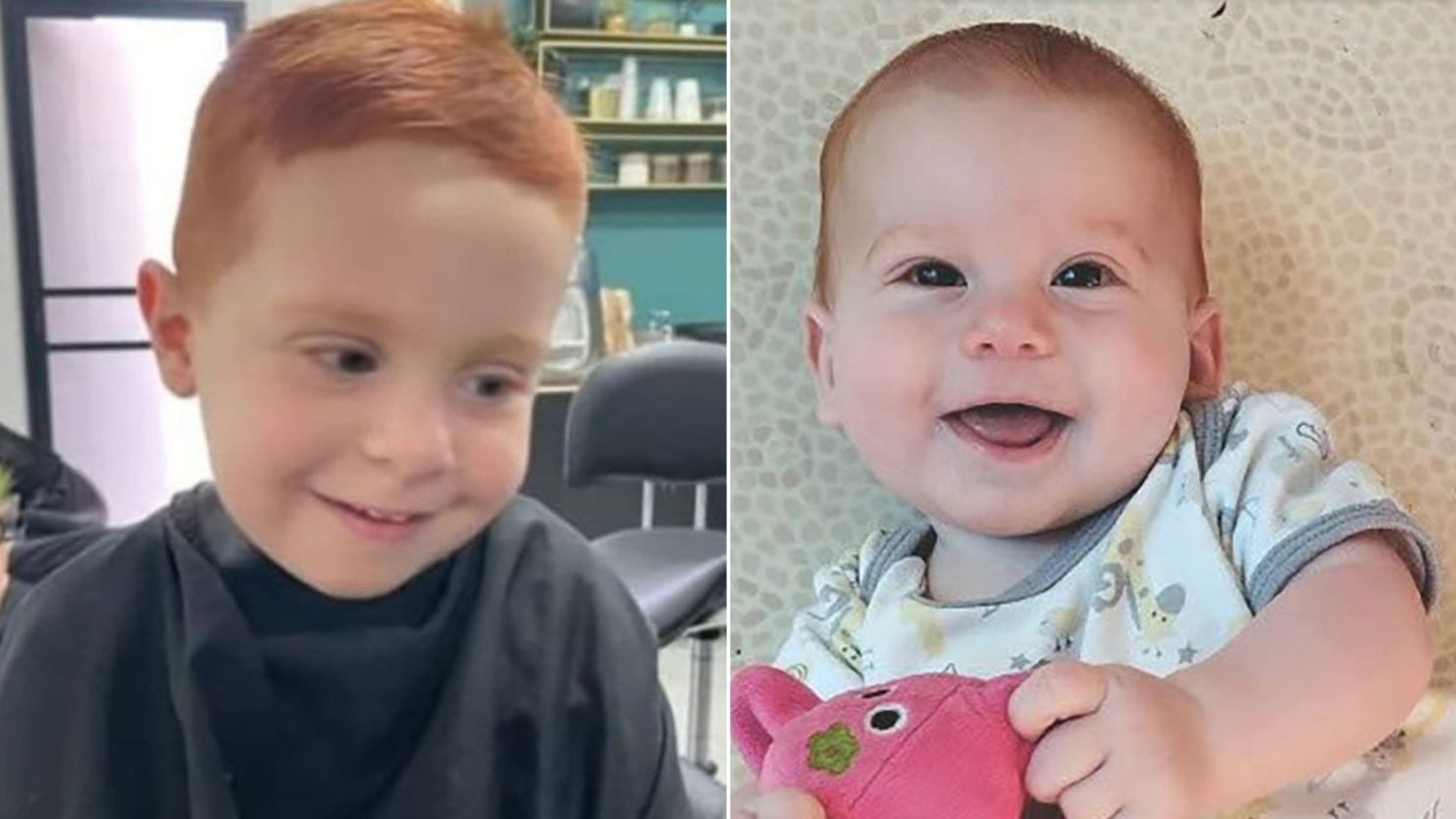
I wrote this piece in February 2024 for the New York Post—back then, the 120 days that hostages were imprisoned felt interminable. We couldn’t imagine how much longer the nightmare would stretch, or how much more suffering lay ahead.
But since then, there have been another 618 days. We have mourned at the funerals of Shiri Bibas and her young sons, Kfir and Ariel—the baby with fiery red hair who turned one in captivity and never came home. We have learned that other hostages were executed in those dark tunnels, their final moments unimaginable. We have watched as menacing, hateful mobs—a modern-day KKK—continued marching through the streets of Western cities, screaming for Jewish blood while the world looked away or worse, cheered them on.
The people of Israel and those who cherish Western democracy have cried in unison, witnessing civilization itself under siege.
What the hostages, their families, and Jews around the world have had to endure since I wrote this is simply too much to comprehend.
Today, we celebrate those who have finally come home. And we mourn Kfir, Ariel, and all those who never will.
Today, on October 13, 2025, October 8th is finally here.

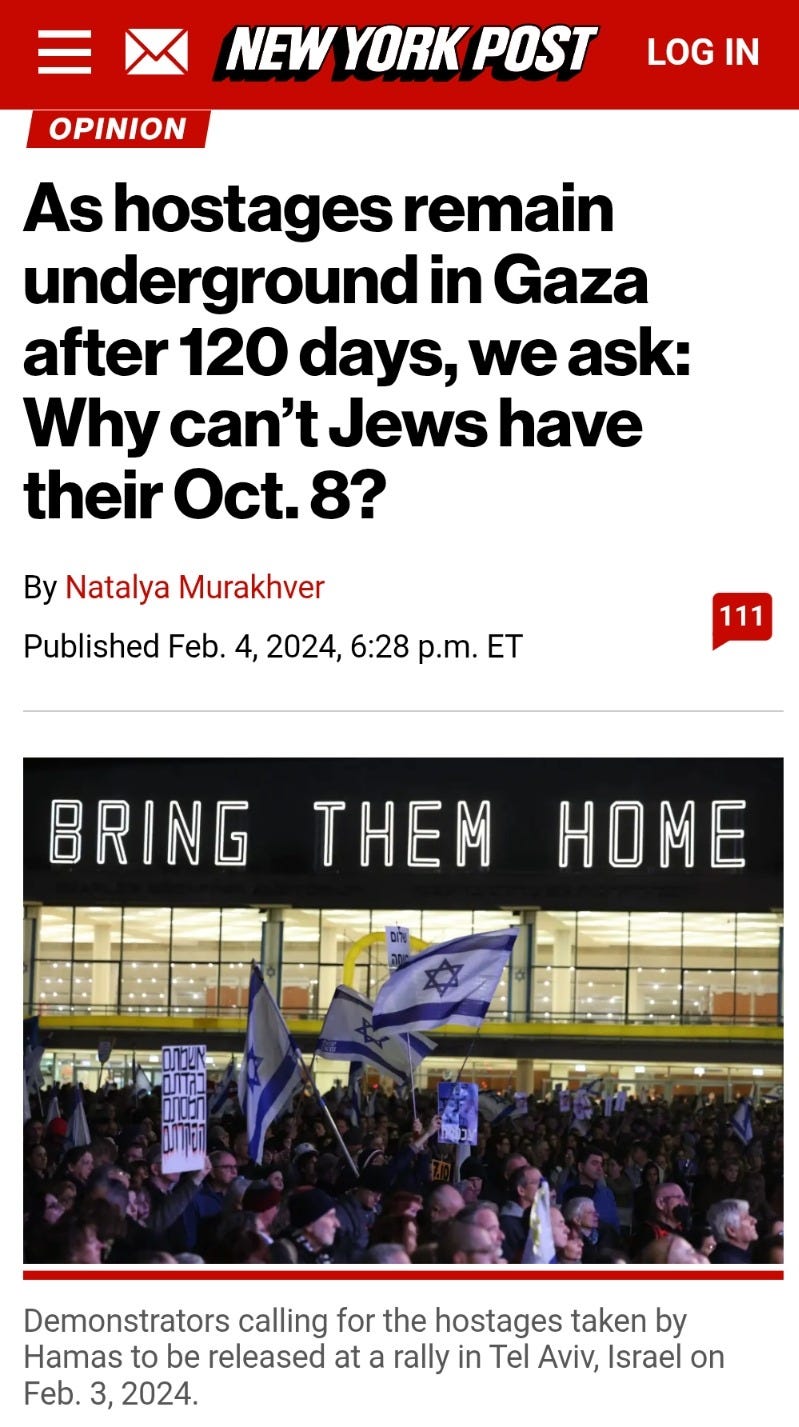
As hostages remain underground in Gaza after 120 days, we ask: Why can’t Jews have their Oct. 8?
After 9/11, it took me six months to begin to process the murders of 2,977 people, most just six miles from my upper Manhattan apartment, after two planes crashed into the World Trade Center and burned, broke and forced people to leap to their deaths one sunny Tuesday morning.
The images were searing.
There were no modern parallels.
They were family members, friends, neighbors.
I felt a profound internal shift — how could human beings do this to one another?
New York City was reeling, people lost in a collective daze.
Eyes glazed, we wandered through burnt, oily air, through the stages of grief — denial, anger, bargaining, depression and acceptance.
The post-traumatic stress disorder reshaped our new selves, forever changed from who we were the night of Sept. 10.
Still, with each passing day, we moved away from the horror and progressed toward something.
There was a “then” — Sept. 11 — and a “now” — Sept. 12 — and they were not the same.
Twenty-two years later, on the morning of Oct. 7, Jews experienced the deadliest massacre since the Holocaust.
We did not have all the details immediately, though soon we would understand: Hamas murdered 1,200 people, kidnapped 250 and injured, raped and mutilated countless others in the most horrific ways
.
A familiar dread set in — was this Israel’s 9/11? And what would tomorrow bring?
Sept. 12 brought global moral clarity and resolve, the West coalescing around a grieving United States.
But on Oct. 8, neither Jews nor Israel were allowed to grieve or process.
Immediate calls for a cease-fire denied even our right to self-defense.
The precipitous rise of aggressive antisemitism — riots, assaults and hateful screeds etched onto synagogues and schools — has continued to deepen the wounds and made healing impossible.
The world suddenly seems smaller and more hostile, closing in.
More than 120 days later, 136 hostages remain in Hamas captivity.
On Oct. 18, 11 days after Hamas’ carnage, President Biden tried to reassure us: “To those who are living in limbo waiting desperately to learn the fate of loved ones, especially to families of the hostages: You’re not alone.”
But the world’s Jews were — are — alone, in limbo.
Calls for “cease-fire” reverberated through the streets of American cities before the blood had dried and bodies were identified at the Nova massacre.
Violent rallies praising Hamas, filled with youth holding signs such as “Keep the World Clean” with a Jewish star being disposed of in the trash went viral on social media.
People tore down or shredded flyers featuring kidnapped baby and elderly hostages, brazenly shouting anti-Jew hate at anyone who approached them.
The president focuses his time pressuring Israel’s prime minister — whom he calls “a “bad f–king guy” — to lay off terrorists in Gaza while all but ignoring the innocents Hamas holds there.
Oct. 8 has not arrived.
Oct. 7 is our yesterday, today and tomorrow.
When Hamas took our men, women and children into the Gaza Strip’s deep dark tunnels, it committed a gruesomely brilliant act whose implications went far beyond the friends and family of those stolen.
The terrorists knew that by holding these hostages and releasing videos of tortured men and brutalized girls, they had captured not just 250 but all the world’s 16 million Jews.
They knew we could not move forward without the hostages’ release or the return of the bodies of the dead.
We would live Oct. 7 for eternity.
Not even 80 years after the last Holocaust killed 6 million, how had Jews been lulled into complacency, believing it behind us, when it lurked just up ahead?
The last living survivors, many children in the 1930s and ‘40s, are still sharing their stories, trying in vain to ensure it never happens again.
But it happened again.
And with each day that passes, while more than 130 Jews — including Kfir, the baby with the fiery red hair who turned 1 as a Hamas hostage — are not returned, we cannot begin to heal.
We are in limbo.
We are held in those tunnels.
We see our faces in the torn down and replaced “Kidnapped” fliers on street corners.
We see our children’s faces in the children who were murdered and those in captivity.
We see our sons in every fallen soldier.
Judaism’s focus is on life here and now, not the afterlife.
So Oct. 7 is all there is.
We are full of torture scenes. Of rape, beheading, dismemberment.
There are no assurances, no answers.
All the world’s Jews are replaying stories from released hostages. The drugged children.
All the world’s Jews are experiencing survivor’s guilt for being out while they are still in.
All the world’s Jews are trapped in Hamas’ tunnels.
When will we return home?
Will Oct. 8 ever come?